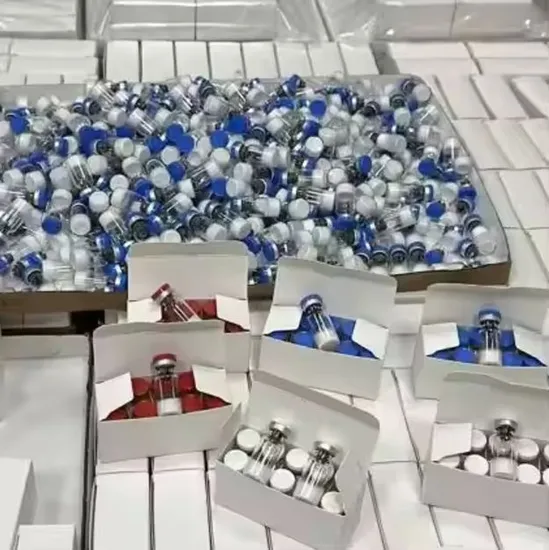
Batch-Specific CoA with Named HPLC Methods — every lot of Ghk-Cu copper peptide is released against documented analytical conditions, enabling your receiving laboratory to reproduce the purity result without guesswork.
Product Specification
| Parameter |
Value |
| Chemical Identity |
Ghk-Cu (Glycyl-L-histidyl-L-lysine copper complex), CAS 89030-95-5 |
| Product Type |
Peptide Raw Material |
| Category |
Organic Intermediate |
| Appearance |
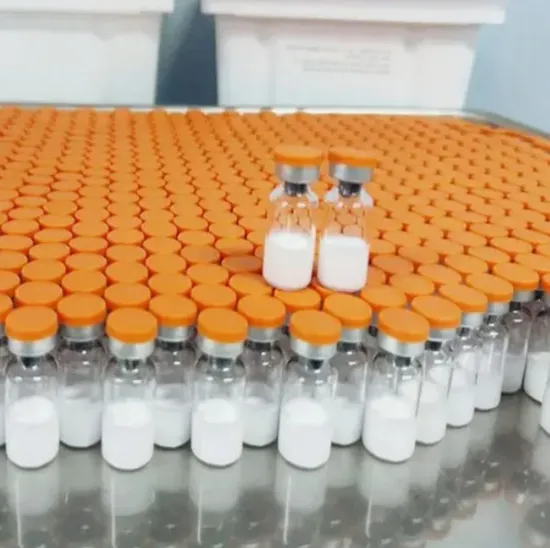
Blue Lyophilized Powder |
| Purity |
>99% by HPLC (method details on batch CoA) |
| Form |
Lyophilized Powder |
| Specification |
50mg |
| Storage Temperature |
-20°C, sealed, light-protected |
| Shelf Life |
Up to 24 months from manufacturing date (lyophilized, stored at -20°C) |
| Reconstitution |
Sterile water or buffer to 1–10 mg/mL |
| Reconstituted Stability |
Approximately 1 month at 4°C, approximately 6 months at -20°C |
| Freeze-Thaw Limit |
Aliquot to avoid repeated freeze-thaw cycles |
| Packaging |
50mg per bottle/box |
| HS Code |
29371290 |
| Certification |
GMP, ISO 9001 |
Intended Use
| Use Category |
Notes |
| Laboratory Research Input |
Supplied as a raw material for in vitro biochemical studies |
| Biochemistry and Molecular Biology Research |
Suitable for protein binding and enzyme modulation investigations |
| Analytical Reference Material |
Supports method development and validation workflows |
| Synthesis Intermediate |
Tripeptide copper complex for downstream formulation input |
Supplied as a raw material for research and manufacturing use. Not for human or veterinary use. Not a finished product.
When the Certificate of Analysis Lacks the Method Behind the Purity Number
A purity value without its analytical method is unverifiable against your own QC instruments.
I have handled dozens of Ghk-Cu Copper Peptide 99% Purity CAS 89030-95-5 shipments where the receiving lab could not reproduce the stated purity because the CoA listed only a percentage, never the column, mobile phase, or gradient used. Method omission is among the most frequent root causes in purity disputes between suppliers and analytical laboratories [NEED_CITE: ICH Q2 method validation requirements for peptide purity testing]. Without named HPLC conditions, your QC team is essentially running a different assay and comparing results that were never meant to align.

Method Transparency from Certificate to Benchtop
Each batch of Ghk-Cu ships with a Certificate of Analysis that explicitly states the HPLC column type, mobile phase composition, flow rate, and detection wavelength used for purity determination. Mass spectrometry confirmation is documented alongside the chromatographic result, so identity verification does not rely on retention time alone. This documentation structure allows your analytical team to set up equivalent conditions on their own instruments without exchanging multiple rounds of clarification emails.
Aligning Your Laboratory’s QC with the Supplier’s Data
Receiving laboratories often operate different HPLC systems and column chemistries than the originating QC lab. When the Ghk-Cu Copper Peptide 99% Purity CAS 89030-95-5 CoA names the exact analytical method, your team can evaluate whether method transfer is straightforward or whether a bridging study is required. Retained samples from every production lot are held for repeat testing, providing a physical reference if your initial results fall outside specification tolerances [NEED_CITE: retained sample protocols for peptide raw materials]. This approach eliminates the ambiguity that typically delays incoming material release.
Interpreting the Specification Parameters That Matter Downstream
The stated purity is determined by HPLC with the method conditions printed on each batch-specific CoA, which is essential because different gradient profiles can resolve different impurity populations in a tripeptide copper complex. Water content in lyophilized peptides affects both weighing accuracy and long-term stability; this material is sealed and stored at -20°C to minimize moisture uptake throughout the documented 24-month shelf life. The blue lyophilized powder form provides a visual indicator of the copper coordination state — any color shift upon storage may signal degradation or oxidation before instrumental analysis is even performed. Reconstitution in sterile water or buffer to 1–10 mg/mL followed by aliquoting prevents cumulative freeze-thaw damage that can fragment the peptide backbone. The 50mg packaging size accommodates research-scale trials while remaining compatible with analytical balance precision requirements.
The Hidden Cost of Incomplete Documentation at Customs and QC
A Certificate of Analysis that does not match the physical batch number on the vial is grounds for shipment rejection at any regulated receiving dock. I have seen Ghk-Cu lots delayed for weeks because import paperwork listed an outdated CoA revision while the vial carried a newer batch code, forcing the buyer’s procurement team to negotiate a resolution while the material sat outside cold-chain conditions. When analytical method documentation is absent, QC managers cannot authorize release, and the material remains in quarantine inventory — consuming warehouse space and delaying research timelines without any technical fault in the product itself [NEED_CITE: documentation requirements for peptide raw material import clearance].
Why Procurement Teams and QC Managers Source This Material Here
Every dispatched lot of Ghk-Cu carries a CoA with named analytical methods rather than a generic purity statement. Custom synthesis to your supplied sequence and modification is available when catalog specifications do not match your project requirements. Research-quantity orders and bulk orders originate from the same quality system, so method documentation remains consistent as you scale. Temperature-controlled packing includes transit temperature records, giving your receiving team proof that the -20°C storage requirement was maintained throughout logistics. Import documentation is prepared according to the destination country’s customs format, reducing the risk of port-side delays that break cold-chain integrity.
Documentation & Traceability
- Batch-specific Certificate of Analysis stating the HPLC method, column, and gradient used for this exact lot
- Mass spectrometry confirmation report verifying tripeptide copper complex identity per production batch
- Analytical method summary document enabling your QC laboratory to reproduce purity testing conditions
- Safety Data Sheet matching the specific CAS 89030-95-5 classification and handling requirements
- Cold-chain packing record with transit temperature data for shipment condition verification
- Certificate of Origin and import documentation formatted per destination customs authority requirements
Storage, Handling & Shipping
- Store Ghk-Cu at -20°C in the original sealed container to maintain the documented 24-month shelf life
- Protect the blue lyophilized powder from light exposure to prevent photodegradation of the copper complex
- Aliquot reconstituted solutions immediately to avoid cumulative freeze-thaw damage to the peptide structure
- Reconstituted material remains stable approximately one month at 4°C or approximately six months at -20°C
- Shipped in temperature-controlled packaging with transit data loggers recording thermal conditions throughout delivery
- Wear appropriate PPE when handling the lyophilized powder to prevent laboratory cross-contamination
Requesting a Quotation with Complete Analytical Alignment
When inquiring about Ghk-Cu CAS 89030-95-5, specify the purity threshold and analytical method your receiving laboratory uses for incoming inspection. Indicate whether you require retained samples and stability data packages to support your internal quality system. Provide your destination country so that import documentation can be prepared in the correct format before dispatch.
Frequently Asked Questions
Q: How is the batch-specific CoA linked to the physical shipment?
A: Each vial carries a lot number that corresponds to a unique Certificate of Analysis stored in the quality system. When you receive Ghk-Cu CAS 89030-95-5, the lot number on the label matches the CoA document, which details the HPLC method, column specifications, and MS confirmation for that exact production run. This traceability ensures your QC team is reviewing data generated from the material they are testing.
Q: Which analytical methods are used to verify purity?
A: Purity is determined by HPLC with full method conditions named on every CoA, including column type, mobile phase, and detection parameters. Mass spectrometry provides orthogonal identity confirmation. If your laboratory uses a different HPLC configuration, the method documentation allows your team to evaluate equivalency or request method transfer support.
Q: What happens if our lab’s retest result does not match the CoA?
A: Retained samples from every production lot are available for parallel retesting. When a discrepancy arises, the supplier’s QC team reviews the original method conditions and can perform a side-by-side comparison against your retained sample. This process isolates whether the variance originates from method differences, instrument calibration, or handling conditions after delivery.
Q: Are retained samples kept for every batch?
A: Yes. Every production lot of Ghk-Cu copper peptide has retained samples stored under the same -20°C conditions specified on the product documentation. These samples remain available for repeat testing and method comparison throughout the material’s shelf life, supporting your laboratory’s incoming quality verification process.
Q: What are the storage requirements for lyophilized and reconstituted material?
A: Lyophilized Ghk-Cu must be stored at -20°C, sealed, and protected from light for up to 24 months. After reconstitution with sterile water or buffer, the solution is stable for approximately one month at 4°C or approximately six months at -20°C. Aliquoting is recommended to prevent repeated freeze-thaw cycles that compromise peptide integrity.