Analytical Method Transparency — every dispatched lot of this Research Peptide raw material is accompanied by a batch-specific Certificate of Analysis that names the exact HPLC and MS conditions used, ensuring your laboratory can reproduce the verification without method guesswork.
Product Specification
| Parameter |
Value |
| Product Type |
Peptide Raw Material |
| EC Number |
89030-95-5 |
| Property |
Protein and Peptide |
| Appearance |
Lyophilized powder |
| Color |
White |
| Purity |
Verified by HPLC (method details on batch COA) |
| Impurity Content |
< 0.1% by HPLC (method to be confirmed) |
| Assay Method |
HPLC and MS analysis |
| Packaging Size |
Available in 5 mg, 10 mg and 15 mg |
| Container Type |
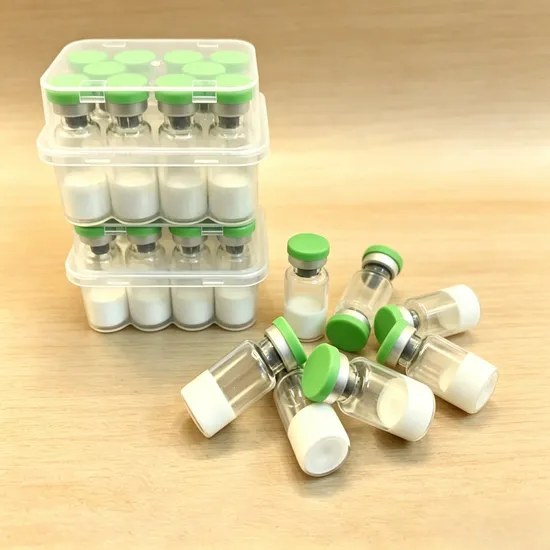
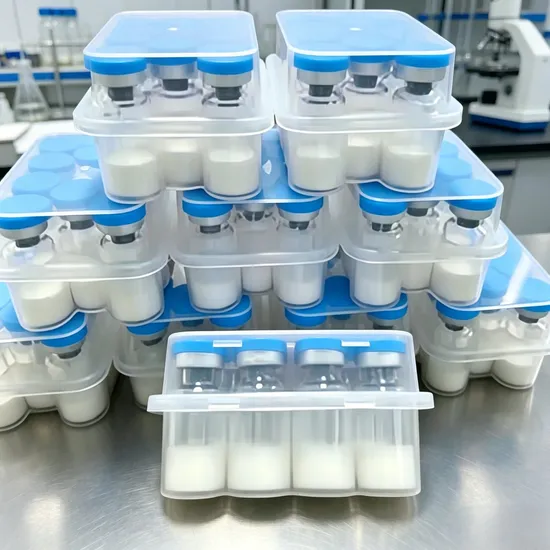
Bottle / Box |
| Storage Temperature |
−20 °C, sealed, light-protected |
| Reconstituted Stability |
Approximately 1 month at 4 °C; up to 6 months at −20 °C |
| Shelf Life |
Up to 24 months from date of manufacture (lyophilized, stored at −20 °C) |
| Reconstitution |
Sterile water or buffer to 1–10 mg/mL |
| Handling |
Aliquot to avoid freeze-thaw cycles; wear PPE |
| MOQ |
5 mg |
| Production Capacity |
10,000 g per year (verify against batch certificate) |
| Documentation |
COA, MSDS, HPLC and MS reports on request |
| HS Code |
2937190099 |
| Standards |
GMP, USP, EP |
| Key Features |
Batch-specific analytical documentation, temperature-controlled dispatch readiness, research and bulk scale from a single source |
Intended Use
| Use Category |
Notes |
| Laboratory research input |
Compatible with in vitro assay workflows requiring verified peptide identity |
| Protein structure-function research |
Lyophilized format supports precise gravimetric preparation |
| Receptor-ligand interaction studies |
Purity verified by HPLC and MS to confirm sequence identity |
| Peptide-based drug discovery research |
Available in 5 mg, 10 mg and 15 mg for screening and scale-up |
| Analytical reference material |
Batch-specific COA with named methods supports method validation |
Supplied as a raw material for research and manufacturing use. Not for human or veterinary use. Not a finished product.
What a Certificate Cannot Tell You Without the Method
A purity number is only as reliable as the chromatographic conditions behind it.
I once worked with a research group that received a lyophilized peptide batch labeled at high purity, yet when their QC lab re-ran the sample on their own HPLC system, the result diverged significantly from the supplier’s certificate. The root cause was not contamination or degradation — it was method mismatch. Different column chemistries, gradient slopes, and detection wavelengths can shift peak integration enough to produce conflicting purity figures for the exact same vial. [NEED_CITE: HPLC method validation requirements per ICH guidelines] For any Research Peptide raw material analytical verification exercise, the COA must state the column type, mobile phase composition, flow rate, and detector settings so the receiving laboratory can align its own protocol before questioning the material.

How Method Alignment Prevents Purity Disputes
When the analytical method is fully disclosed on the batch certificate, your QC team can replicate the exact gradient, column, and wavelength used during release testing. This Research Peptide raw material analytical verification approach eliminates the most common source of inter-laboratory disagreement. Each lot ships with an HPLC and MS report that documents retention times, mass confirmation, and integration parameters, giving your analysts a reference chromatogram to overlay against their own data.
Traceability from Dispatch to Bench
Batch traceability matters most when a result does not match expectations. Every container of this material carries a lot number linked to retained samples, production records, and the specific analytical run that generated its COA. [NEED_CITE: retained sample protocols for peptide raw materials] If your laboratory observes a discrepancy, the retained sample can be re-tested under mutually agreed conditions, turning what could become a supply dispute into a structured analytical investigation.
Reading the Specification Sheet Critically
A specification sheet lists targets; the COA confirms what was actually measured. For this lyophilized peptide, purity is verified by HPLC against the batch certificate, and identity is confirmed by MS. The impurity profile is assessed alongside appearance, solubility, and moisture considerations. Understanding which parameters were tested — and which were verified by calculation versus direct measurement — helps your procurement and QC teams set realistic incoming inspection criteria. [NEED_CITE: peptide impurity profiling conventions under USP general chapters]
Why Storage Conditions Shape Your First Result
Lyophilized powder stored at −20 °C, sealed and protected from light, maintains documented stability for up to 24 months. However, once reconstituted in sterile water or buffer, the clock changes: approximately one month at 4 °C and up to six months at −20 °C. Aliquoting immediately after reconstitution prevents repeated freeze-thaw cycles, which are a primary driver of peptide degradation in the laboratory. The storage parameters on the COA should match the conditions your laboratory actually maintains, because even a brief excursion during transit or bench handling can alter the chromatographic profile before the first injection.
The Hidden Cost of Incomplete Documentation
A shipment held at customs because the certificate of origin or HS code is missing does not merely delay a project — it forces the receiving laboratory to repeat stability-critical storage steps under uncertain conditions. When the COA lacks method details, the buyer’s QC team must invest time developing and validating an alternative method before they can even confirm identity. [NEED_CITE: customs documentation requirements for peptide raw material imports] These delays compound: procurement timelines slip, project milestones shift, and the relationship between buyer and supplier erodes over what is fundamentally a paperwork problem rather than a chemistry problem.
Why Procurement Teams Choose This Source
Each batch ships with a COA that names HPLC and MS as the release methods, including column and gradient specifics, so your laboratory does not need to reverse-engineer the supplier’s protocol. Custom synthesis is available to buyer-supplied sequences and modifications, with specification agreements locked before production begins. Research-scale quantities (5 mg, 10 mg, 15 mg) and bulk orders come from the same verified production line, eliminating source-switching risk during scale-up. Temperature-controlled packing with transit temperature records ensures the cold chain is demonstrable, not assumed. Import documentation — including certificate of origin, HS code 2937190099, and destination-specific paperwork — is prepared per the receiving country’s requirements. Technical support on specification interpretation, handling, and storage is available post-delivery, so discrepancies can be resolved through analytical dialogue rather than return logistics.
Documentation & Traceability
- Batch-specific COA stating the HPLC and MS methods used for this exact lot
- Mass spectrometry report confirming molecular identity and sequence integrity
- Analytical method summary enabling your QC lab to replicate release conditions
- Safety data sheet aligned with the lyophilized powder form and transport classification
- Certificate of origin and import documentation prepared per destination country requirements
- Retained sample program supporting future re-testing and longitudinal comparison
Storage, Handling & Shipping
- Store lyophilized powder at −20 °C in the original sealed, light-protected container
- Aliquot reconstituted solution immediately to avoid repeated freeze-thaw degradation
- Temperature-controlled dispatch with transit temperature logging available on request
- Packaging in bottle/box format with cold-chain insulation appropriate for the shipment route
- Reconstituted material stable approximately 1 month at 4 °C or 6 months at −20 °C
- Import documentation package including HS code 2937190099 and destination customs paperwork
Before You Submit an Inquiry
To accelerate specification alignment, provide your required quantity, target purity threshold, and the analytical method your laboratory uses for incoming inspection. If your facility operates under specific import documentation requirements, share the document checklist so the package can be prepared before dispatch. For custom sequences or modifications, include the full amino acid sequence, any non-standard residues, and the desired counter-ion form so feasibility review and timeline estimation can begin immediately.
Frequently Asked Questions
Q: What analytical methods are named on the Certificate of Analysis for each batch?
A: Every batch of this lyophilized peptide ships with a COA that explicitly names HPLC and MS as the release methods. The report includes the column type, mobile phase, gradient conditions, and detection wavelength used during testing, along with mass confirmation data. This level of detail allows your QC laboratory to reproduce the analysis under identical conditions and verify the stated purity and identity upon receipt.
Q: How is batch-to-batch consistency verified and documented?
A: Each production lot undergoes full-process QC inspection using HPLC and MS analysis, and the results are recorded on a lot-specific COA tied to the dispatched batch number. Retained samples from every lot are stored under controlled conditions for future reference. If your laboratory requires cross-lot comparison data, retained samples can be re-tested and chromatograms provided for side-by-side review.
Q: What support is available if our laboratory’s re-test results differ from the supplied COA?
A: When a discrepancy arises, we provide the complete analytical method summary — including column chemistry, gradient profile, and integration parameters — so your team can align conditions before concluding a deviation exists. If the difference persists, retained samples from the same lot can be re-tested, and our technical team will work with your analysts to identify whether the variance stems from method conditions, sample handling, or instrument calibration.
Q: What are the validated storage conditions and shelf life for the lyophilized powder?
A: The lyophilized powder maintains documented stability for up to 24 months from the date of manufacture when stored at −20 °C in the original sealed, light-protected container. Once reconstituted in sterile water or buffer, stability is approximately one month at 4 °C or up to six months at −20 °C. Aliquoting after reconstitution is recommended to prevent freeze-thaw-related degradation.
Q: Are retained samples kept for future re-testing or comparison?
A: Yes, retained samples from each production lot are archived under controlled storage conditions. These samples support longitudinal studies, batch-to-batch comparison requests, and investigation of any analytical discrepancy reported after delivery. Retained sample re-testing can be arranged with full documentation provided to the requesting laboratory.