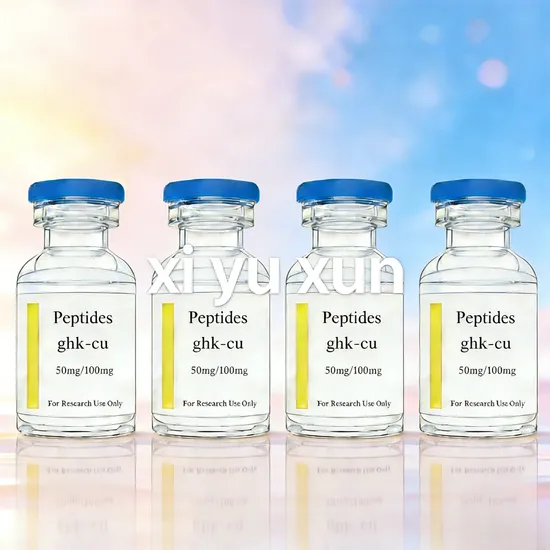
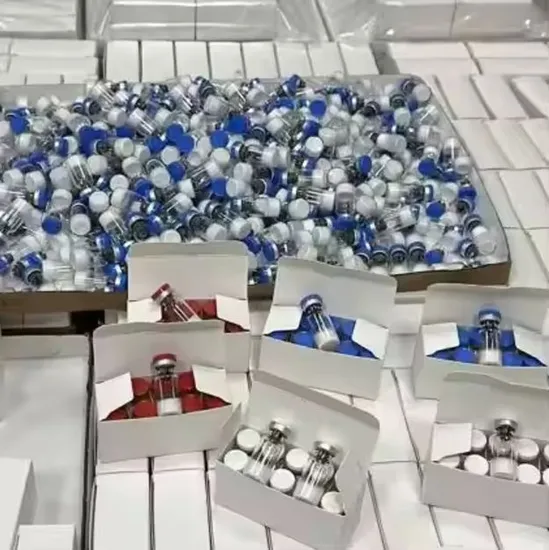
Analytical Method Transparency — Every batch of Ghk-Cu is released with a certificate that names the exact HPLC column, gradient, and detection wavelength used to determine its specification.
Product Specification
| Parameter |
Value |
| Chemical Identity |
Ghk-Cu (Gly-His-Lys complexed with copper) |
| Product Type |
Peptide Raw Material |
| Sequence |
Gly-His-Lys-Cu |
| HS Code |
29371290 |
| Appearance |
White Lyophilized Powder |
| Purity |
>99% by HPLC (UV detection) |
| Identity Confirmation |
Mass Spectrometry (MS) |
| Related Substances |
Impurity content below 0.1% |
| Synthesis Technology |
Chemical Synthesis (solid-phase synthesis) |
| Storage Temperature |
-20°C, sealed, light-protected |
| Shelf Life |
24 months from date of manufacture |
| Packaging Size |
Available in 5mg, 10mg, and 15mg |
| Container Type |
Bottle/Box |
| Quality Standards |
GMP, ISO 9001 |
Intended Use
| Use Category |
Notes |
| Laboratory research input |
Supplied as a raw material for in vitro studies |
| Cell culture studies |
Compatible with standard biochemical assay workflows |
| Molecular biology research |
Sourced for analytical and developmental protocols |
| Cosmetic formulation raw material |
Provided as an intermediate for personal care formulators |
Supplied as a raw material for research and manufacturing use. Not for human or veterinary use. Not a finished product.
Why Two Labs Report Different Purity on the Same Ghk-Cu Batch
Method alignment is the only way to verify a stated specification.
When a certificate of analysis states a purity value without defining the chromatographic conditions, the receiving laboratory has no baseline for their own verification. I have seen instances where a peptide batch was released at a stated purity level, but the buyer’s QC team, using a different mobile phase ratio, recorded a completely different figure. This leads to weeks of dispute over a material that was never actually out of specification. Ensuring Ghk-Cu purity HPLC analytical verification requires the supplier and the buyer to be looking at the exact same chromatographic parameters. [NEED_CITE: analytical method validation protocols for peptide raw materials]
Defining the Chromatographic Baseline
For QC managers, the value on a certificate is irrelevant if the methodology is opaque. Our approach to Ghk-Cu purity HPLC analytical verification involves documenting the specific column chemistry and the gradient profile used during the release testing. This transparency allows your laboratory to replicate the conditions precisely. By providing the exact detection wavelength alongside the batch certificate, we eliminate the variables that typically cause discrepancies between supplier and buyer data.
Mass Spectrometry as a Secondary Lock
While chromatography determines the purity profile, identity must be confirmed independently. Mass Spectrometry is utilized to verify the molecular weight of the Gly-His-Lys-Cu complex, ensuring that the correct tripeptide structure is present. This dual-method approach prevents the release of material that might chromatograph similarly but possesses an incorrect sequence or modification. [NEED_CITE: peptide identity confirmation standards]
The Impact of Impurity Profiling
Controlling related substances is critical for downstream formulation stability. With impurity content maintained below the stated threshold, formulators and researchers can proceed without the risk of side reactions caused by unknown truncation sequences or deletion peptides. A well-characterized impurity profile is essential for any laboratory attempting to establish long-term stability protocols for their final research or manufacturing outputs.

The Hidden Cost of Ambiguous Documentation
A certificate that lacks method documentation often results in the shipment being placed on quarantine hold. For importers and procurement teams, this means the material sits in a bonded warehouse while the QC department attempts to reverse-engineer the supplier’s testing conditions. This delay disrupts research timelines and manufacturing schedules. In worst-case scenarios, entire batches are rejected and returned because the analytical methods could not be reconciled, leading to significant financial loss and supply chain interruptions. [NEED_CITE: quality system requirements for raw material release]
Why Sourcing Here Supports Your Quality System
Our focus is on providing the documentation necessary for your laboratory to operate efficiently. Every shipment of this raw material includes a batch-specific certificate that details the analytical conditions used. We maintain retained samples for every lot, allowing for future re-testing if your specifications require a secondary verification months after delivery. Furthermore, we provide an analytical method summary to support your internal method development and validation processes. Our temperature-controlled packing includes transit records to prove the cold chain was maintained from our facility to yours.
Documentation & Traceability
- Batch-specific certificate of analysis stating the exact HPLC and MS methods used.
- Analytical method summary provided to assist buyer QC in method replication.
- Mass confirmation report verifying the Gly-His-Lys-Cu sequence identity.
- Retained sample program supporting future re-testing and specification alignment.
- Cold-chain packing record documenting temperature history during transit.
Storage, Handling & Shipping
- Store lyophilized powder at -20°C, sealed and protected from light.
- Limit freeze-thaw cycles of reconstituted solutions to maintain stability.
- Reconstituted material remains stable for approximately one month at 4°C.
- Available in 5mg, 10mg, and 15mg bottles to minimize handling losses.
- Temperature-controlled dispatch with transit logs provided upon delivery.
Inquiry and Specification Alignment
Please provide your required packaging size and the specific analytical methods your laboratory uses for incoming inspection. If your quality system requires method validation documentation or specific impurity thresholds, detail these requirements in your inquiry to ensure the provided certificate matches your internal release criteria.
Frequently Asked Questions
Q: Are the specific HPLC conditions provided with the certificate of analysis?
A: Yes. Every batch of Ghk-Cu ships with a certificate that explicitly names the column type, gradient conditions, and UV detection wavelength used. This ensures your QC team can align their methodology for accurate verification without guessing the parameters.
Q: How do you handle discrepancies between your CoA and our internal QC results?
A: Discrepancies usually stem from differing analytical methods. We provide the exact method parameters used for release. If your results differ, we can review the chromatograms and method details together to identify the variable causing the deviation, such as mobile phase composition or integration parameters.
Q: Is a retained sample kept for this peptide raw material?
A: We maintain a retained sample for every batch produced. If your laboratory requires a secondary verification or if a dispute arises regarding the specification after delivery, we can re-test the retained sample to confirm the original release data.
Q: What are the storage requirements for the lyophilized powder?
A: The material must be stored at -20°C in a sealed container, protected from light. Under these conditions, the shelf life is 24 months from the date of manufacture. Proper storage is essential to prevent moisture uptake and degradation.
Q: Do you provide documentation for customs clearance?
A: Yes. We supply all necessary import documentation, including the certificate of origin and safety data sheets. Our shipments include temperature records to satisfy customs and quality requirements for temperature-sensitive research materials.