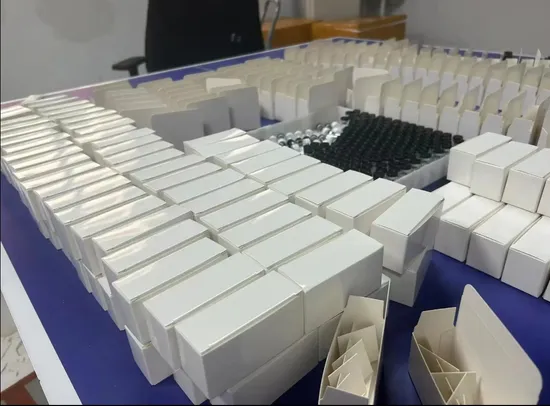
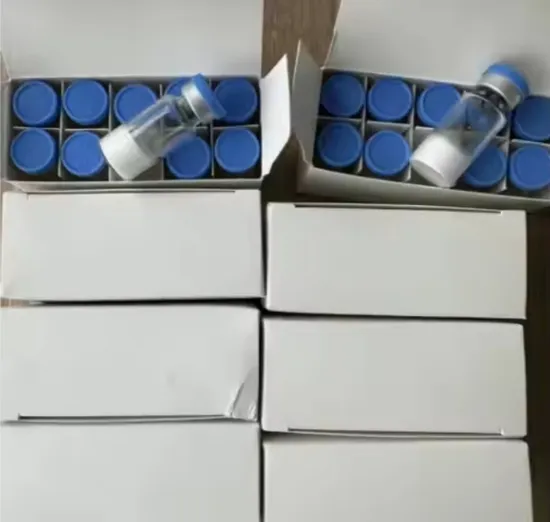
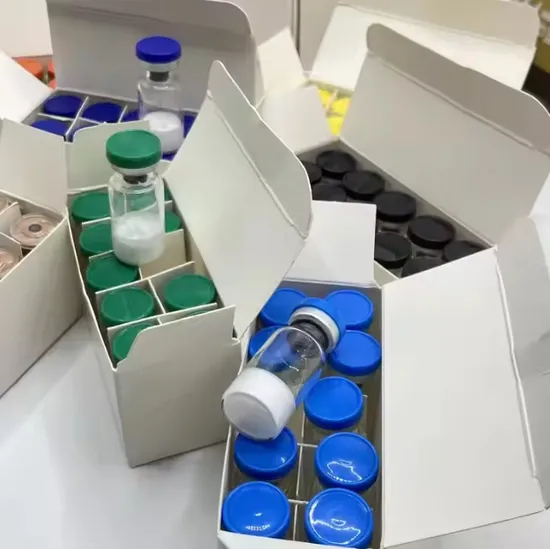
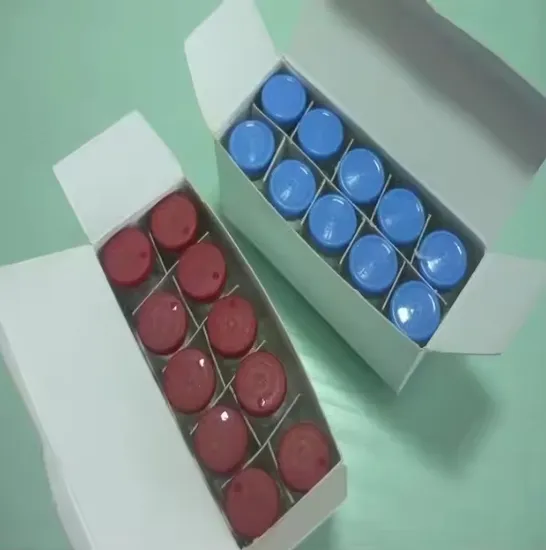
Traceable Batch Verification — Every vial of Melanotan II Mt2 ships with its own CoA detailing the exact HPLC column and mobile phase so your laboratory can reproduce our purity result without method guessing.
Product Specification
| Parameter |
Value |
| Chemical Identity |
Melanotan II Mt2 Mt-2 |
| Product Type |
Peptide Raw Material |
| Appearance |
White lyophilized powder |
| Purity |
>99% by reversed-phase HPLC, UV 214 nm, C18 column, gradient elution |
| Identity Confirmation |
Mass spectrometry and NMR triple verification |
| Related Substances |
Impurity content below 0.1% (method to be confirmed against CoA) |
| Solubility |
Reconstitute in sterile water or buffer (concentration per CoA) |
| Storage (Lyophilized) |
-20°C, sealed, light-protected |
| Storage (Reconstituted) |
4°C short term or -20°C extended |
| Shelf Life |
24 months from manufacturing date at -20°C, unopened (verify per batch) |
| Packaging |
5 mg, 10 mg, 15 mg per vial |
| Container |
Bottle / Box |
| Certification |
GMP, ISO 9001 |
| HS Code |
29371290 |
| Endotoxin |
Reported on batch-specific CoA |
Intended Use
| Use Category |
Notes |
| Laboratory research input |
Supplied as lyophilized raw material for bench-scale protocols |
| Analytical reference material |
Suitable for HPLC method development and instrument qualification |
| In vitro receptor binding assay input |
Melanocortin receptor interaction studies at laboratory scale |
| Peptide-receptor interaction studies |
Compatible with cell-based and biochemical assay platforms |
| Analytical method development |
Triple-verified identity supports reference standard qualification |
Supplied as a raw material for research and manufacturing use. Not for human or veterinary use. Not a finished product.
When Re-Tested Purity Does Not Match the Supplier CoA
Method transparency on the certificate is what separates a reproducible result from a disputed one.
I spent years on the procurement side of a European research institution before moving into QC documentation on the supply end. One of the most recurring issues I encountered was a Nordic laboratory receiving a melanocortin-class peptide batch and obtaining a purity figure several points lower than the stated CoA value. The discrepancy was not a quality failure — it was a method mismatch. Their HPLC conditions used a different column chemistry and a steeper gradient, which altered the elution profile and merged a minor impurity peak into the main peak. Three weeks of back-and-forth communication followed before both labs aligned on parameters. Melanotan II Mt2 purity HPLC analytical verification only becomes meaningful when the receiving lab can replicate the exact conditions named on the certificate. [NEED_CITE: HPLC method validation requirements per ICH guidelines]

How Triple Verification Reduces Analytical Ambiguity
Relying on a single analytical technique leaves room for co-eluting impurities to inflate the reported purity figure. Each batch of this material undergoes reversed-phase HPLC for purity, mass spectrometry for molecular weight confirmation, and NMR for structural verification. When all three data sets converge, the identity of the peptide is established beyond retention time alone, giving the receiving QC laboratory a multi-dimensional reference point for their own Melanotan II Mt2 purity HPLC analytical verification workflow.
Why the Named Column and Gradient Matter for Re-Testing
A C18 column with gradient elution and UV detection at 214 nm is specified on every CoA for this material. The gradient slope and mobile phase composition directly influence how closely related impurities separate from the main peak. If a receiving laboratory substitutes an isocratic method or a different stationary phase, the resulting chromatogram may look structurally different even though the material is identical. Providing the full method summary with each shipment eliminates that variable and shortens the alignment cycle between supplier QC and buyer QC. [NEED_CITE: chromatographic method transfer guidance for peptide raw materials]
Reading the Specification Through a Downstream Lens
The >99% purity value determined by HPLC matters most when the material serves as an analytical reference or as input for receptor binding assays where trace impurities can produce background signals. Impurity content below 0.1% reduces the likelihood of interference peaks in mass spectrometry-based downstream assays. The lyophilized powder form, stored sealed at -20°C and protected from light, maintains peptide integrity across the stated shelf life. Reconstituted solutions held at 4°C or -20°C have a shorter stability window, so aliquoting before freezing prevents repeated freeze-thaw degradation that can fragment the peptide backbone over successive cycles.
The Cost of a Certificate Without Method Detail
A CoA that reports a purity number without naming the column, mobile phase, or detection wavelength is essentially unverifiable. When the receiving laboratory cannot replicate the method, the only recourse is to request raw data files or arrange a third-party analysis — both of which add weeks to the project timeline. In regulated environments, an undocumented method can trigger a non-conformance report and quarantine the entire shipment until the discrepancy is resolved. Batch traceability becomes impossible when the analytical conditions are missing, and the procurement record lacks the evidence needed to support a deviation investigation. [NEED_CITE: regulatory expectations for certificate of analysis completeness]
What Sets This Supply Channel Apart
Every batch carries its own CoA with named HPLC, MS, and NMR methods rather than a generic template. Custom synthesis to buyer-supplied sequence and modification is available when catalogue specifications do not match the project requirement. Research quantities and bulk quantities originate from the same manufacturing line, so scale-up does not introduce a new process variable. Temperature-controlled packing with transit temperature records accompanies each dispatch, providing documented evidence that cold-chain conditions were maintained. Import documentation is prepared per destination-country requirement, reducing the risk of customs holds at the point of entry.
Documentation & Traceability
- Batch-specific CoA stating HPLC column model, mobile phase ratio, and gradient profile
- Mass spectrometry and NMR data files confirming molecular identity per lot
- Purity report with chromatograms and retention time comparison against reference standard
- Safety data sheet matched to the lyophilized powder form and transport classification
- Cold-chain packing record with transit temperature log included in each shipment
- Certificate of origin and import paperwork prepared per destination-country customs format
Storage, Handling & Shipping
- Store lyophilized vials at -20°C in sealed, light-protected packaging until use
- Aliquot reconstituted solutions to avoid repeated freeze-thaw degradation cycles
- Reconstituted material remains stable at 4°C short term or -20°C for extended storage
- Shipped in temperature-controlled packaging with an enclosed transit temperature recorder
- Cold-chain dispatch ensures the lyophilized powder remains within specification during transit
- Import documentation and customs paperwork prepared according to destination-country requirements
Preparing Your Inquiry
To move forward, share the target quantity, preferred vial size, and the analytical method your QC laboratory uses for in-house purity verification. If your import jurisdiction requires specific origin or compliance paperwork, list those documents in the initial request so they can be prepared before dispatch. Specify whether retained samples and stability data are needed for your internal qualification process.
Frequently Asked Questions
Q: How is Melanotan II Mt2 purity determined and documented?
A: Purity is measured by reversed-phase HPLC with UV detection at 214 nm using a C18 column and gradient elution. The batch-specific CoA names the exact column model and mobile phase composition. Identity is cross-confirmed by mass spectrometry and NMR, so the receiving laboratory has three independent data points for Melanotan II Mt2 purity HPLC analytical verification.
Q: What if my QC lab obtains a different purity result?
A: Method mismatch is the most common cause. We supply the full analytical method summary including column, gradient, and flow rate so your team can replicate conditions exactly. If a discrepancy persists, retained samples are available for parallel testing, and raw chromatographic data files can be shared for direct comparison.
Q: Which documents ship with each order?
A: Each dispatch includes a batch-specific CoA with chromatograms, an analytical method summary, safety data sheet, cold-chain packing record with temperature log, and certificate of origin. Raw HPLC, MS, and NMR data files are available upon request to support your laboratory’s internal qualification and traceability requirements.
Q: What are the storage requirements for lyophilized and reconstituted material?
A: Lyophilized vials should be stored at -20°C, sealed and protected from light. Once reconstituted, the solution can be held at 4°C for short-term use or returned to -20°C for extended storage. Aliquoting before freezing is recommended to prevent degradation from repeated freeze-thaw cycles.
Q: How is batch-to-batch consistency maintained?
A: Each production lot is verified against the same triple-testing protocol — HPLC, MS, and NMR — and compared to an authenticated reference standard. Retained samples from every batch allow retrospective analysis if a future order needs to be cross-referenced against a previous shipment for method alignment or specification review.