
Buy Custom Peptide Synthesis Service at Factory-Direct Cost
The lowest quote on a proforma invoice is rarely the true factory-direct cost.
True factory-direct pricing for cosmetic and pharmaceutical peptides is not defined by the unit price alone, but by the total landed cost after accounting for batch rejection risks, cold-chain integrity failures, and documentation gaps. To secure genuine value, formulators must validate the entire testing chain—specifically requiring batch-specific HPLC and MS raw data rather than generic Certificates of Analysis—and enforce strict temperature logging during transit to prevent degradation that renders even high-purity material useless upon arrival.
Having managed procurement for cosmetic formulators in the Middle East, I learned this lesson through a costly shipment of GHK-Cu. The supplier offered an attractive rate and provided a standard CoA claiming ≥99% purity. However, upon arrival at Jebel Ali Port, independent testing revealed the purity hovered around 96%. Combined with a four-day delay in a hot warehouse where the cold chain had broken, the entire container was rejected. The financial loss extended far beyond the product cost, covering logistics, penalties, and production downtime. This experience reshaped my approach to sourcing custom peptide synthesis cost structures, shifting focus from headline prices to verifiable quality assurance protocols.
Sourcing peptides directly from manufacturers eliminates distributor markups, but it introduces technical responsibilities that distributors usually absorb. Understanding how to audit these technical safeguards is essential for any buyer aiming to optimize their supply chain without compromising on quality.
Why "Factory-Direct" Often Costs More Than Expected?
Many buyers assume that bypassing distributors automatically reduces the custom peptide synthesis cost. While the unit price drops, the hidden costs of undocumented supply chains can inflate the true acquisition expense significantly. Without the buffer of a local distributor who handles quality disputes, the buyer assumes all risk associated with manufacturing variances and logistical failures.
The primary risk lies in the discrepancy between claimed and actual purity. A batch that meets specifications on paper may fail in practice due to inconsistent synthesis processes or inadequate purification. When such a batch arrives at its destination, the cost of return shipping, disposal, and reformulation delays often exceeds the initial savings. [NEED_CITE: impact of supply chain disruptions on cosmetic formulation timelines]
Furthermore, logistical errors are more common in direct exports, especially for temperature-sensitive molecules like copper peptides. If a manufacturer lacks robust cold-chain protocols, the product may degrade during transit to hot climates. This degradation is not always visible immediately but becomes apparent during stability testing or final product formulation, leading to batch failures months later.
| Risk Factor | Undocumented Direct Sourcing | Verified Factory-Direct Sourcing |
|---|---|---|
| Purity Verification | Generic CoA only | Batch-specific HPLC/MS spectra |
| Cold-Chain Integrity | Standard packaging | Temperature logger records |
| Documentation Traceability | Basic certificates | Full chain-of-custody documentation |
| Rejection Liability | Buyer bears full cost | Shared responsibility via clear QC data |
To mitigate these risks, buyers must treat the verification process as part of the purchase price. Investing time in auditing the manufacturer’s quality control systems reduces the likelihood of costly rejections. This approach ensures that the custom peptide synthesis cost reflects the true value of the material received, not just the material shipped.
How to Validate Purity Beyond the Certificate of Analysis?
A Certificate of Analysis (CoA) is often treated as proof of quality, but in reality, without raw data, it is merely a claim. Many suppliers provide generic CoAs that do not correspond to the specific batch being shipped. To ensure you are receiving pharmaceutical-grade purity, you must require batch-specific analytical data.
The gold standard for verification includes High-Performance Liquid Chromatography (HPLC) and Mass Spectrometry (MS) spectra. HPLC confirms the purity percentage by separating the main peptide from impurities, while MS confirms the molecular weight and identity of the compound. [NEED_CITE: standard analytical methods for peptide purity verification]
When reviewing these documents, look for consistency between the CoA claims and the raw spectra. The retention time in the HPLC chromatogram should match the standard, and the MS spectrum should show the expected molecular ion peak. Discrepancies here indicate potential issues with the synthesis or purification process.
Additionally, verify that the testing was performed on the exact batch you are purchasing. Batch numbers on the CoA must match those on the product label and shipping documents. Some manufacturers reuse CoAs for multiple batches, which is a significant red flag. Requesting raw data files allows your internal quality team to perform an independent review, adding a layer of security to your procurement process.
This level of scrutiny may seem excessive for cosmetic ingredients, but for active peptides like Matrixyl or Argireline, even minor impurities can affect formulation stability and efficacy. Ensuring that the custom peptide synthesis cost includes comprehensive documentation protects your brand from downstream quality issues.
What Logistics Data Proves Cold-Chain Integrity?
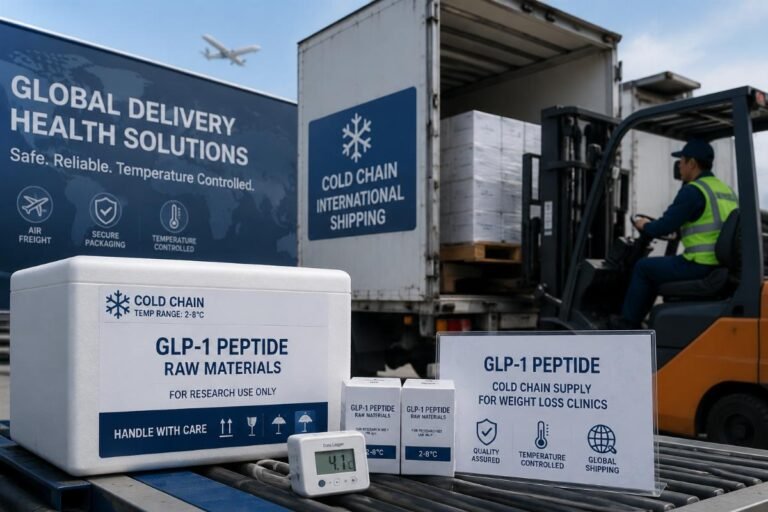
Peptides are sensitive to temperature fluctuations, and exposure to heat can cause degradation, aggregation, or loss of activity. For buyers in hot regions, ensuring cold-chain integrity is critical. Simply using insulated packaging is not enough; you need verifiable data to prove that the temperature remained within the specified range throughout transit.
Temperature loggers are small devices placed inside the shipment that record temperature at regular intervals. Upon arrival, the data can be downloaded and reviewed. If the logger shows spikes above the recommended storage temperature, the product may be compromised, even if it appears normal visually. [NEED_CITE: peptide stability studies under thermal stress]
In my previous role, we mandated the use of these loggers for all shipments of GHK-Cu and other temperature-sensitive peptides. When a shipment arrived with a recorded temperature spike, we were able to reject the goods before they entered our inventory, saving us from potential formulation failures. Without this data, we would have had to rely on visual inspection or delayed testing, both of which are unreliable indicators of peptide integrity.
Manufacturers who invest in cold-chain monitoring demonstrate a commitment to quality that goes beyond basic compliance. They understand that the custom peptide synthesis cost is negated if the product arrives degraded. Therefore, when evaluating suppliers, ask about their cold-chain protocols and whether they provide temperature logs with each shipment.
| Logistics Feature | Standard Practice | Best Practice |
|---|---|---|
| Packaging | Insulated box with gel packs | Validated cold-chain packaging |
| Monitoring | None or external estimate | Internal temperature logger |
| Data Access | Not provided | Digital download upon arrival |
| Response to Excursion | Case-by-case negotiation | Pre-defined rejection criteria |
By requiring temperature data, you shift the burden of proof to the supplier. This ensures that any degradation occurring during transit is identified and addressed before the product is used in production, protecting your investment and maintaining product consistency.
Which Questions Uncover True Manufacturing Capability?
Not all manufacturers possess the same level of technical capability. Some are merely trading companies with limited oversight of the production process, while others operate fully integrated facilities with rigorous quality control. Asking the right questions can help you distinguish between the two and identify partners who can deliver consistent quality at a fair custom peptide synthesis cost.
Start by inquiring about their synthesis method. Solid-phase peptide synthesis (SPPS) is the industry standard for producing high-purity peptides. Ask about their capacity for scale-up, from milligram research quantities to kilogram bulk production. A manufacturer with flexible scaling capabilities can support your growth from R&D to commercial production without requiring you to switch suppliers.
Next, probe their traceability systems. Can they trace every batch back to the raw materials used? This level of traceability is essential for regulatory compliance and quality investigations. Manufacturers who maintain detailed records of raw material sources and production parameters are more likely to produce consistent, high-quality products. [NEED_CITE: importance of raw material traceability in GMP manufacturing]
Finally, ask about their certification status. While cGMP and ISO certifications are important, they are not guarantees of quality. Inquire about their internal quality control procedures and how they handle deviations. A transparent manufacturer will be willing to share details about their QA/QC processes, including how they validate cleaning procedures and prevent cross-contamination.
These questions help you assess the manufacturer’s technical depth and commitment to quality. A supplier who can answer these questions confidently and provide supporting documentation is more likely to be a reliable long-term partner. This due diligence ensures that the custom peptide synthesis cost you pay is justified by the reliability and quality of the supply chain.
Conclusion
Securing true factory-direct value requires looking beyond the invoice price.
Successful procurement of custom peptides depends on validating purity through raw analytical data, enforcing cold-chain integrity with temperature logs, and auditing manufacturing capabilities for traceability and scale. By focusing on these technical safeguards, formulators can avoid the hidden costs of rejected batches and ensure a stable, high-quality supply chain.
Leave a Reply