Method Transparency — Batch-specific certificate of analysis detailing the exact HPLC column, mobile phase gradient and detector settings used for your lot of GHK-Cu NAD lyophilized powder.
Product Specification
| Parameter |
Value |
| Product Type |
Custom Synthesized Peptide |
| Sequence |
GHK-Cu NAD |
| EINECS |
89030-95-5 |
| Appearance |
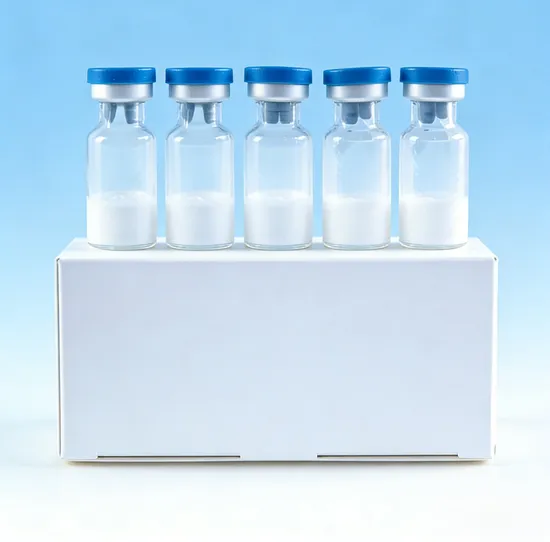
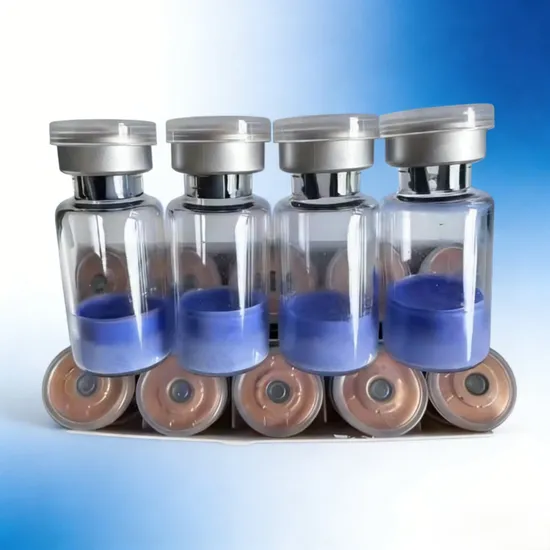
Lyophilized Powder |
| Purity |
>99% by HPLC |
| Impurity Content |
<0.1% |
| Identity Confirmation |
Mass Spectrometry (MS) |
| Structural Verification |
NMR |
| Solubility |
Reconstitute in sterile water or buffer to 1–10 mg/mL |
| Packaging |
5 mg, 10 mg, 15 mg per bottle |
| Storage |
-20°C, sealed, light-protected |
| Reconstituted Stability |
Approximately 1 month at 4°C; approximately 6 months at -20°C |
| Shelf Life |
24 months from manufacturing date (lyophilized, -20°C, sealed, light-protected) |
| Certification |
COA, MSDS |
| Standards Referenced |
USP, EP, GMP |
| MOQ |
5 mg |
| HS Code |
29371290 |
Intended Use
| Use Category |
Notes |
| Laboratory research input |
Suitable for in vitro studies on peptide interactions and cellular signaling pathways |
| Cosmetic formulation raw material |
Compatible with aqueous-phase formulation systems at research scale |
| Analytical reference |
Batch-verified identity and purity for method development and QC benchmarking |
Supplied as a raw material for research and manufacturing use. Not for human or veterinary use. Not a finished product.
Why Two Labs Report Different Purity on the Same GHK-Cu NAD Batch
The divergence almost always traces back to HPLC conditions that were never disclosed on the original certificate.
I have handled disputes where a receiving lab ran the sample on a C18 column with a different pore size and a steeper acetonitrile gradient than the supplier used. The impurity profile shifted enough to push the reported purity below the specification limit, triggering a formal rejection. Neither lab was wrong — they were simply measuring different things under different names. GHK-Cu NAD purity HPLC analytical verification only holds meaning when the method is fully named and reproducible across instruments. [NEED_CITE: HPLC method validation requirements per ICH guidelines]

What the Certificate Must Show Before You Trust the Number
A purity claim of >99% by HPLC is the starting point, not the conclusion. For this material, every batch certificate names the column chemistry, particle size, flow rate, mobile phase composition and gradient programme that produced the reported figure. Without those details, your QC team has no baseline for method alignment when they repeat the analysis in-house. The triple-verification protocol — HPLC for purity, MS for molecular identity and NMR for structural confirmation — closes the gap between what the certificate states and what the vial contains.
How Batch Traceability Prevents Specification Drift
Each production lot receives a unique identifier tied to retained samples stored under controlled conditions. If your laboratory flags an out-of-specification result during incoming inspection, we retrieve the retain and re-test it under your stated method parameters to isolate the variable. This traceability chain from synthesis record to shipping log ensures that any GHK-Cu NAD purity HPLC analytical verification dispute resolves against documented evidence, not opinion. [NEED_CITE: retained sample requirements per GMP guidelines for active pharmaceutical ingredients]
Reading the Specification Sheet with a QC Lens
The impurity content is controlled below 0.1% per HPLC, which matters because unresolved minor peaks in copper-coordinated peptides can interfere with downstream complexation reactions in formulation workflows. The lyophilized format at -20°C with light protection maintains chemical integrity across the 24-month shelf life; reconstitution introduces a hydrolytic degradation pathway that accelerates above 4°C. Packaging in 5 mg, 10 mg and 15 mg bottles allows single-aliquot use, eliminating repeated freeze-thaw exposure that degrades copper-peptide coordination bonds over time. The stated solubility range of 1–10 mg/mL in sterile water or buffer reflects the material’s behaviour at room temperature before chelate destabilisation begins.
The Hidden Cost of Undocumented Analytical Methods
When a certificate lists only "HPLC" without naming the column or gradient, the receiving laboratory cannot distinguish a genuine specification failure from a method-induced artefact. The consequence is a chain reaction: quarantine of the entire shipment, emergency re-ordering from a second source at compressed timelines, and weeks of project delay while both parties exchange chromatograms that are not directly comparable. In regulated environments, an incomplete certificate also stalls import clearance because customs authorities require the analytical method as part of the technical dossier. [NEED_CITE: import documentation requirements for research chemical raw materials]
Why Procurement Teams Source This Material Here
Batch-specific certificates carry the full analytical method, not an abbreviated summary — your QC lab receives the column model, gradient table and integration parameters alongside the chromatogram. Triple verification by HPLC, MS and NMR means identity and structure are confirmed independently, reducing the risk of misidentified sequences entering your research pipeline. Retained samples are archived per lot with historical documentation retrievable by order number, so disputes resolve against physical evidence. Temperature-controlled packing with transit temperature records accompanies every shipment, providing proof of cold-chain integrity from dispatch to delivery. Import documentation is prepared according to destination-country requirements, reducing hold-ups at customs for international buyers.
Documentation & Traceability
- Batch-specific certificate of analysis naming the HPLC column and gradient used for your lot
- Mass spectrometry report confirming molecular identity of the GHK-Cu NAD sequence
- NMR data package verifying structural integrity of the copper coordination complex
- Safety data sheet aligned with current GHS classification for this material
- Cold-chain packing record documenting temperature throughout transit
- Certificate of origin and import paperwork matched to destination country requirements
Storage, Handling & Shipping
- Store lyophilized powder at -20°C in the original sealed, light-protected bottle until use
- Aliquot reconstituted solution to avoid freeze-thaw cycles that destabilise the copper-peptide bond
- Reconstituted material remains stable approximately one month at 4°C or six months at -20°C
- Dispatch in temperature-controlled packaging with a data logger recording conditions throughout transit
- Shipped under HS Code 29371290 with full import documentation prepared per destination requirement
What to Include in Your Inquiry
Specify the analytical method your QC laboratory will use for incoming inspection so we can align our certificate format and provide method-matched chromatograms. Indicate whether you require retained sample archiving and stability documentation for publication or regulatory filing purposes. If your facility operates under specific import regulations, list the documentation items your customs broker requires so we prepare the dossier before dispatch.
Frequently Asked Questions
Q: How is the certificate of analysis linked to the specific batch received?
A: Every bottle carries a lot number that corresponds to a unique batch record. The certificate of analysis references this lot number and includes the specific HPLC, MS and NMR data generated from that production run. Retained samples from the same lot are archived for future reference or dispute resolution.
Q: Which analytical methods determine the stated purity, and are raw data files provided?
A: Purity is determined by HPLC with the column type, particle size and gradient programme stated on the certificate. Identity is confirmed by mass spectrometry and structural integrity by NMR. Raw chromatograms and spectra files are available upon request in standard data formats compatible with common laboratory information systems.
Q: What is the procedure if our QC lab re-test results differ from the supplier certificate?
A: We retrieve the retained sample from the same lot and re-analyse it using your laboratory’s stated method parameters. A side-by-side comparison of chromatograms under identical conditions isolates whether the variance stems from method differences or a genuine specification deviation, and resolution follows documented evidence.
Q: Are retained samples kept, and can historical batch data be retrieved?
A: Yes, retained samples are stored under controlled conditions for each production lot. Historical analytical data including chromatograms and spectra can be retrieved by order number or lot identifier to support ongoing research documentation, audit requirements or repeat-ordering decisions.
Q: What are the validated storage conditions and shelf-life specifications?
A: The lyophilized powder maintains specification for 24 months from the manufacturing date when stored at -20°C in sealed, light-protected containers. Once reconstituted in sterile water or buffer, the solution is stable approximately one month at 4°C or six months when re-frozen at -20°C in single-use aliquots.