Method Transparency — Every lot of Ghk Cu Peptide is released with a batch-specific certificate naming the HPLC column, mobile phase, and UV detection wavelength, so your QC lab can replicate our analytical conditions exactly.
Product Specification
| Parameter |
Value |
| Chemical Identity |
Ghk Cu Peptide (EINECS 89030-95-5) |
| Product Type |
Peptide Raw Material |
| Sequence |
Gly-His-Lys complexed with copper |
| Property |
Protein and Peptide |
| Appearance |
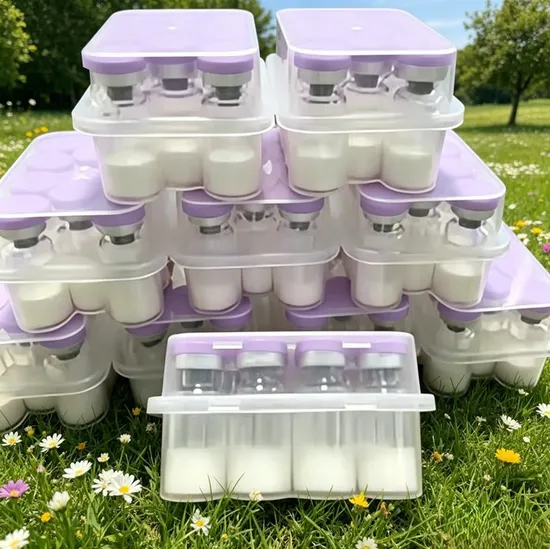
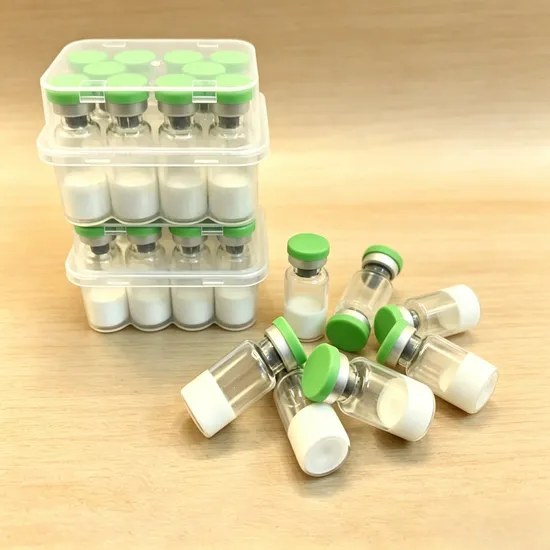
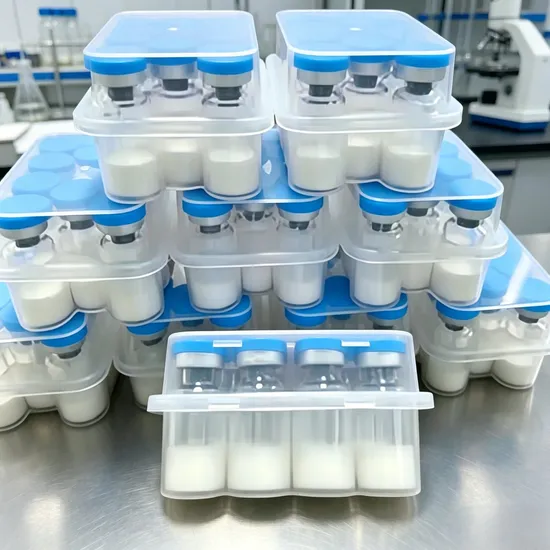
White lyophilized powder |
| Purity |
99% by reverse-phase HPLC with UV detection at 220 nm |
| Endotoxin |
Below 0.1 EU/μg |
| Impurity Level |
Below 0.1% |
| Analytical Methods |
HPLC (purity), MS (structural confirmation), NMR (available for qualified academic institutions) |
| Packaging Size |
Available in 5 mg, 10 mg, and 15 mg |
| Container Type |
Bottle/Box |
| Storage Temperature |
−20 °C, sealed, light-protected (lyophilized); 4 °C up to 1 month, −20 °C up to 6 months (reconstituted) |
| Shelf Life |
24 months from manufacturing date (lyophilized powder at −20 °C) |
| Reconstitution |
Sterile water or buffer to 1–10 mg/mL |
| Freeze-Thaw Limit |
Aliquot to avoid freeze-thaw cycles |
| Certification |
Certificate of Analysis (COA), Material Safety Data Sheet (MSDS) |
| Origin |
China |
| HS Code |
2937190099 |
| Standards |
USP, EP, GMP |
Intended Use
| Use Category |
Notes |
| Laboratory research input |
Supplied as raw material for in vitro assay development and biochemical investigation |
| In vitro research reagent |
Compatible with peptide-protein interaction study protocols at research scale |
| Metallopeptide stability research |
Copper-complexed tripeptide for coordination chemistry and stability profiling |
| Analytical reference material |
Suitable for QC method development and HPLC system suitability testing |
Supplied as a raw material for research and manufacturing use. Not for human or veterinary use. Not a finished product.
Why Two Labs Report Different Purity on the Same Ghk Cu Peptide Batch
The discrepancy almost always traces back to the analytical method, not the material itself.
Early in my career running HPLC and mass spectrometry in an analytical lab, I watched a European research institution reject a shipment of GHK Cu Peptide because their in-house method returned a purity figure 0.8% lower than the supplier’s certificate stated. The material was identical; the gradient slope, column chemistry, and detection wavelength were not. Without full Ghk Cu Peptide purity HPLC analytical verification parameters documented on the COA, the receiving lab has no baseline for alignment, and disputes like this consume weeks of correspondence and re-testing cycles [NEED_CITE: ICH Q2 method validation guidelines for peptide purity assessment].

Reverse-Phase HPLC Conditions and Chromatographic Traceability
Each release certificate for this copper-complexed tripeptide includes the specific reverse-phase HPLC conditions: column type, mobile phase composition, gradient profile, and UV detection set at 220 nm. The chromatogram is appended so the receiving laboratory can visually confirm peak shape, resolution, and integration boundaries before setting up their own Ghk Cu Peptide purity HPLC analytical verification run. This level of detail eliminates ambiguity around whether the stated 99% purity was determined by area normalization or by external standard calibration.
Mass Spectrometry for Structural Confirmation at Every Release
Purity alone does not confirm identity. A co-eluting impurity with similar retention characteristics could inflate an HPLC area percentage without triggering a flag. For this reason, every batch undergoes mass spectrometry to verify the expected m/z value for the Gly-His-Lys copper complex, ensuring that the molecular ion matches the theoretical sequence before the lot is released. The MS spectrum is included in the batch documentation package alongside the chromatogram.
Specification Tolerances and Method Alignment
Batch consistency is controlled within 0.5% across production lots, verified against the documented method. When a buyer’s QC laboratory uses a different column chemistry — say, a C4 instead of a C18 — or adjusts the trifluoroacetic acid concentration in the mobile phase, the resulting chromatographic profile may shift retention times and alter integration outcomes. Providing the complete analytical method summary with each shipment enables the receiving lab to reproduce our conditions precisely, or to perform a documented method equivalency study before releasing the material internally [NEED_CITE: analytical method transfer protocols for peptide raw materials].
The Cost of Undocumented Analytical Parameters
A certificate that lists a purity number without naming the method is functionally incomplete for any laboratory that intends to re-test on receipt. In one documented instance, a research group held a shipment for over a month while negotiating which party’s method should serve as the reference standard. Full Ghk Cu Peptide purity HPLC analytical verification documentation — column, gradient, wavelength, integration parameters — prevents this category of delay entirely. Without it, the buyer absorbs the cost of repeated analyses, delayed project timelines, and potential material degradation during extended storage at the receiving dock.
How Specification Gaps Delay Research Timelines
When a certificate of analysis omits the HPLC method or provides an endotoxin value without specifying the assay used, the downstream consequence is not merely administrative. QC teams must initiate out-of-specification investigations, quarantine the material, and escalate to the supplier for clarification — a cycle that can extend project timelines by weeks. For temperature-sensitive lyophilized peptides stored at −20 °C, prolonged resolution periods also increase the risk that the material has experienced undocumented thermal excursions while sitting in a receiving area awaiting disposition [NEED_CITE: cold chain packaging standards for temperature-sensitive materials].
Sourcing with Full Analytical Traceability
Every batch ships with a certificate of analysis that names the exact HPLC and MS methods used, not a generic statement of compliance. Retained samples from each production lot are archived, enabling post-delivery re-testing if your laboratory’s results diverge from the documented specification. The analytical method summary is provided in sufficient detail for your QC team to replicate testing conditions without needing to request additional information. Cold-chain dispatch with transit temperature records ensures that the −20 °C storage requirement is maintained and verifiable from our facility to your receiving dock. Historical COA records are retrievable by order number, supporting documentation requirements for published research and regulatory submissions.
Documentation & Traceability
- Batch-specific COA naming HPLC column, gradient, and 220 nm UV detection parameters
- Mass spectrometry spectrum confirming Gly-His-Lys copper complex molecular ion
- Endotoxin report with assay method stated for each released lot
- Analytical method summary enabling buyer QC lab replication
- Retained sample archived per lot for post-delivery dispute resolution
- Historical certificates retrievable by order number for audit and publication support
Storage, Handling & Shipping
- Store lyophilized powder at −20 °C in sealed, light-protected containers for 24-month shelf life
- Aliquot reconstituted solutions to avoid repeated freeze-thaw degradation cycles
- Reconstituted material stable at 4 °C for up to one month or −20 °C for up to six months
- Shipped in temperature-controlled packaging with transit temperature logging records
- Each bottle packaged individually to prevent cross-contamination during transport
- Import documentation prepared per destination country requirements including HS Code 2937190099
Requesting a Specification Match
To align our release criteria with your laboratory’s requirements, please provide the HPLC method your QC team uses for peptide purity determination, along with any specific column or mobile phase constraints. Indicate the quantity range needed — from 5 mg research vials to bulk lots — and whether retained samples or stability data packages are required for your internal documentation. If your facility operates under specific import compliance frameworks, share the destination country so we can prepare the appropriate certificate of origin and customs paperwork in advance.
Frequently Asked Questions
Q: How is purity determined — what HPLC method and detection wavelength are used?
A: Purity is determined by reverse-phase HPLC using UV detection at 220 nm. The batch-specific certificate of analysis documents the column type, mobile phase composition, and gradient profile so your laboratory can replicate the exact conditions. The full chromatogram with integration parameters is included for transparency.
Q: What if our QC lab’s re-test result does not match the supplied COA?
A: We provide a complete analytical method summary so your lab can align testing conditions with ours. If a discrepancy persists, retained samples from the same lot are available for parallel re-testing. We support method equivalency discussions to identify whether column chemistry, gradient, or integration differences account for the variance.
Q: Do you retain batch samples for future re-testing or third-party verification?
A: Yes. Retained samples from every production lot are archived under controlled storage conditions. These are available for post-delivery re-testing, third-party laboratory verification, or dispute resolution. Historical COA records linked to each retained sample can be retrieved by order number.
Q: What documentation is included with each shipment?
A: Each shipment includes a batch-specific certificate of analysis with HPLC and MS data, a material safety data sheet, an analytical method summary, and a cold-chain packing record with transit temperature data. Certificates of origin and import documentation are prepared according to destination country requirements.
Q: What are the storage conditions and shelf life for the lyophilized powder and reconstituted solution?
A: The lyophilized powder has a 24-month shelf life when stored sealed and light-protected at −20 °C. After reconstitution with sterile water or buffer, the solution remains stable at 4 °C for up to one month or at −20 °C for up to six months. Aliquoting is recommended to minimize freeze-thaw cycles.