Product Specification
| Parameter |
Value |
| Product Type |
Peptide Raw Material |
| Designation |
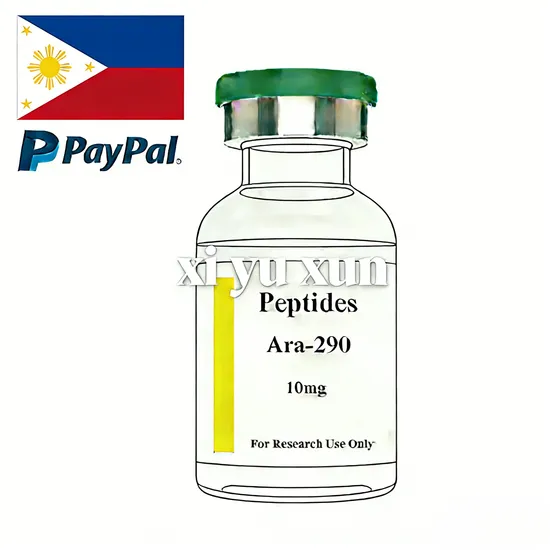
Ara290 (erythropoietin-derived peptide) |
| Appearance |
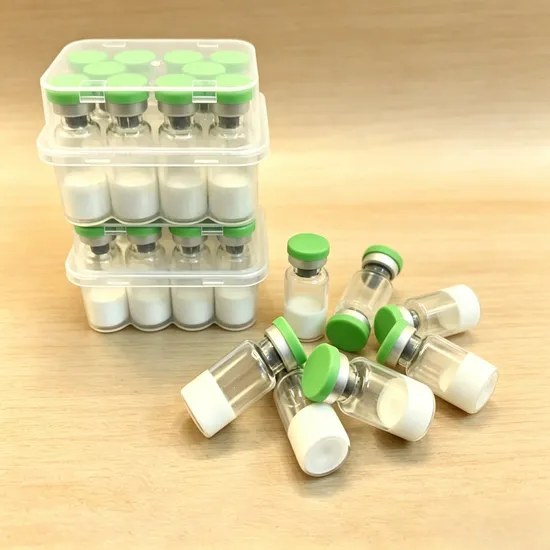
Lyophilized Powder |
| Purity |
>99% verified by triple testing: HPLC, MS, and additional purity verification |
| Related Substances |
Impurity content controlled below 0.1% (method to be confirmed on batch CoA) |
| Assay Methods |
High-Performance Liquid Chromatography (HPLC), Mass Spectrometry (MS) |
| Solubility |
Reconstitute in sterile water or buffer (verify against batch-specific CoA) |
| Packaging Sizes |
Available in 5mg, 10mg, 15mg, 20mg, and 30mg configurations |
| Container Type |
Sealed Bottle/Box |
| Storage (Lyophilized) |
-20°C, sealed, light-protected |
| Storage (Reconstituted) |
4°C for approximately 1 month; -20°C for approximately 6 months |
| Shelf Life |
24 months from manufacturing date under recommended lyophilized storage |
| Certification Standards |
GMP, ISO 9001 |
| Handling Precaution |
Aliquot to avoid repeated freeze-thaw cycles |
Intended Use
| Use Category |
Notes |
| Laboratory Research Input |
Supplied for in-vitro biochemical and molecular research applications |
| Analytical Reference Material |
Suitable for method development and instrument calibration in peptide analysis |
| Protein-Protein Interaction Studies |
Applicable to receptor binding and molecular interaction research protocols |
| Cell-Based Assay Development |
Compatible with protocol validation for in-vitro cellular models |
Supplied as a raw material for research and manufacturing use. Not for human or veterinary use. Not a finished product.
Why Two Labs Report Different Purity on the Same Ara290 Batch
Discrepancies arise when the analytical method is not explicitly named on the Certificate of Analysis.
I have seen situations where a generic purity claim on a CoA led to weeks of back-and-forth because the buyer’s QC lab used a different HPLC gradient and column chemistry. When the supplier’s method is a black box, the receiving laboratory has no baseline to align against, and Ara290 peptide purity HPLC analytical verification becomes a dispute rather than a confirmation. Defining the exact chromatographic conditions upfront eliminates this friction entirely. [NEED_CITE: HPLC method validation requirements per ICH guidelines]

Aligning HPLC Conditions for Reliable Re-Testing
A Certificate of Analysis that simply states a purity percentage without detailing the stationary phase, mobile phase gradient, and flow rate provides no actionable data for a receiving lab. Our batch-specific CoA for Ara290 documents the exact HPLC column model and elution profile used during release testing. This transparency ensures that when your quality control team runs a verification, they are working from the same analytical foundation, making Ara290 peptide purity HPLC analytical verification a straightforward replication rather than an exercise in method guessing.
Mass Spectrometry as an Identity Anchor
Purity is one dimension; identity confirmation is another. Every batch of this material undergoes mass spectrometry to confirm the molecular weight against the expected erythropoietin-derived peptide sequence. This dual-verification approach—chromatographic purity coupled with mass confirmation—provides a layered analytical profile. The MS data is included in the documentation package, giving analytical laboratories the evidence needed to close out identity verification without requesting additional testing cycles. [NEED_CITE: peptide identity confirmation by mass spectrometry best practices]
Interpreting the Impurity Profile Beyond a Single Number
An aggregate purity figure does not reveal what the remaining fraction consists of. The impurity profile included in the Ara290 CoA breaks down related substances, showing individual peak areas and retention times. For laboratories conducting receptor binding studies or developing cell-based assays, knowing the nature and proportion of truncation sequences or deletion impurities is critical for interpreting experimental outcomes. This level of detail transforms the CoA from a pass/fail document into a functional analytical tool.
How Storage Conditions and Freeze-Thaw Cycles Affect Specification Integrity
The 24-month shelf life applies strictly to lyophilized powder stored at -20°C in its original sealed, light-protected packaging. Once reconstituted, the stability window narrows significantly—approximately one month at 4°C and six months at -20°C. Repeated freeze-thaw cycles accelerate degradation pathways, which can shift the HPLC impurity profile on re-analysis. Aliquoting upon initial reconstitution and documenting each thermal cycle preserves the analytical integrity that the original CoA represents. Packaging from 5mg to 30mg supports portioning strategies that minimize unnecessary thermal stress on the bulk material.
The Hidden Cost of Incomplete Analytical Documentation
When a Certificate of Analysis lacks named methods or omits the impurity breakdown, the downstream consequences are entirely operational. A QC lab unable to replicate the stated purity will place the batch on hold, delaying research timelines and consuming analyst hours on method troubleshooting rather than productive work. Incomplete import documentation compounds this, holding temperature-sensitive shipments at customs where cold-chain integrity degrades without any transit record to assign accountability. These are not specification failures—they are documentation failures that manifest as material losses. [NEED_CITE: cold chain packaging standards for temperature-sensitive materials]
Procurement Backed by Method Transparency
Sourcing Ara290 here means receiving a documentation package built for analytical scrutiny rather than marketing assurance. Each batch is accompanied by a CoA that names the HPLC and MS methods used, an analytical method summary enabling your lab to replicate the conditions, and a cold-chain packing record with transit temperature data. Retained samples from every production lot are archived, so if a specification question arises months after delivery, a direct comparison against the original batch is possible. The ISO 9001-certified quality system underpins this traceability chain from synthesis through dispatch.
Documentation & Traceability
- Batch-specific CoA naming the HPLC column, gradient, and MS parameters for this Ara290 lot
- Analytical method summary enabling receiving QC labs to replicate verification conditions
- Mass spectrometry confirmation report verifying peptide identity against expected sequence
- Impurity profile with individual peak retention times and relative area percentages
- Cold-chain packing record with continuous transit temperature log for each shipment
- Retained sample archive enabling future re-testing against the original released batch
Storage, Handling & Shipping
- Store lyophilized Ara290 at -20°C in original sealed packaging, protected from light exposure
- Aliquot reconstituted solutions immediately to prevent freeze-thaw degradation across cycles
- Reconstituted material remains stable at 4°C for approximately one month per specification
- Dispatched in temperature-controlled packaging with continuous transit temperature monitoring
- Shipped under HS Code 29371290 with destination-specific import documentation prepared per requirement
Requesting a Quotation with Complete Specifications
To move forward, provide your required batch quantity, preferred packaging size from the available range, and the analytical methods your QC laboratory uses for incoming inspection. If your facility requires specific import documentation for customs clearance in your destination market, include that checklist with your inquiry so the shipping file is prepared before dispatch. For projects requiring retained samples or extended stability data, note those requirements upfront to align the documentation package before production scheduling.
Frequently Asked Questions
Q: What analytical methods are used to determine Ara290 purity, and are they named on the CoA?
A: Purity is determined by HPLC, and identity is confirmed by mass spectrometry. The batch-specific Certificate of Analysis names the exact HPLC column model, mobile phase composition, and gradient profile used. This allows your QC laboratory to replicate the Ara290 peptide purity HPLC analytical verification without requesting additional method details after delivery.
Q: How does batch traceability work — can I match the CoA to the specific batch received?
A: Every shipment includes a CoA bearing the same lot number printed on the product label. Retained samples from that exact production batch are archived at our facility. If your lab identifies a discrepancy during incoming inspection, we can pull the retained sample and run a side-by-side re-test under the same documented conditions to resolve the question.
Q: What if my QC lab’s re-test results differ from the supplier’s CoA?
A: Discrepancies typically trace back to differences in HPLC gradient, column chemistry, or sample preparation. We provide a full analytical method summary with each order so your team can replicate our conditions precisely. If results still diverge, our technical support reviews both datasets and, if necessary, performs a re-test on the retained sample to pinpoint the source of variation.
Q: Are retained samples kept for future repeat-testing or specification disputes?
A: Yes. Retained samples from every released Ara290 batch are stored under the same -20°C conditions specified on the CoA. These archives remain available for the duration of the product shelf life, providing a physical reference point for any future re-testing, specification alignment discussions, or analytical method comparisons your laboratory may require.
Q: What storage conditions and shelf life are documented on the batch-specific CoA?
A: The CoA states the 24-month shelf life for lyophilized powder stored at -20°C, sealed, and protected from light. It also documents the reconstituted stability windows—approximately one month at 4°C and six months at -20°C—along with the instruction to aliquot solutions to avoid repeated freeze-thaw cycles that compromise analytical integrity.