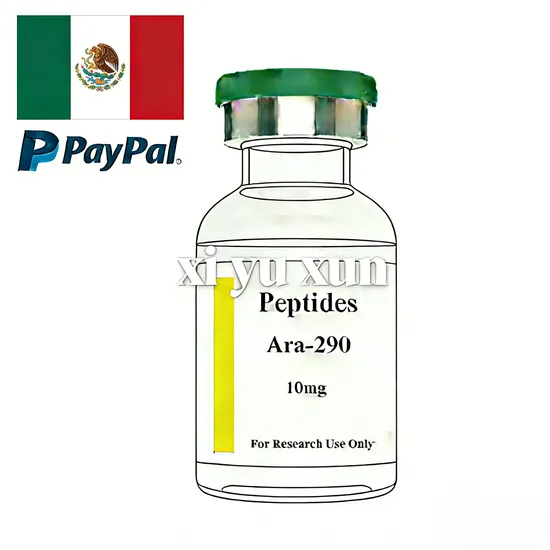
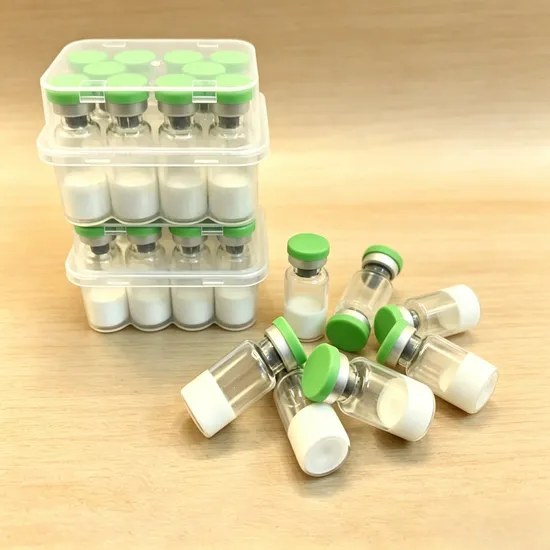
Verified Analytical Methods — Every shipment of Ara290 raw material includes a batch-specific certificate naming the exact HPLC conditions and MS parameters used to establish purity and identity.
Product Specification
| Parameter |
Value |
| Product Type |
Peptide Raw Material |
| Sequence |
Ara290 |
| Appearance |
Lyophilized Powder |
| Purity |
>99% by HPLC with UV detection |
| Identity Confirmation |
Mass Spectrometry (MS) |
| Packaging Options |
5mg, 10mg, 15mg, 20mg, 30mg per bottle |
| Container Type |
Bottle / Box |
| Storage Temperature |
-20°C, sealed, light-protected |
| Reconstitution Solvent |
Sterile water or buffer to 1–10 mg/mL |
| Reconstituted Stability |
~1 month at 4°C, ~6 months at -20°C |
| Shelf Life (Lyophilized) |
24 months from manufacturing date at -20°C |
| Freeze-Thaw Limit |
Aliquot to avoid repeated freeze-thaw cycles |
| Production Capacity |
10,000 g/year |
| HS Code |
29371290 |
| Quality Standards |
GMP, ISO 9001 |
| Origin |
China |
Intended Use
| Use Category |
Notes |
| Laboratory research input |
Supplied as lyophilized powder for in vitro analytical workflows |
| In vitro cellular signaling pathway investigation |
Compatible with cell culture media preparation at research scale |
| Receptor interaction studies |
Identity verified by MS for binding assay reference use |
| Protein binding assays |
HPLC-verified purity supports reproducible assay conditions |
| Cell culture studies |
Reconstituted with sterile water or buffer per documented protocol |
Supplied as a raw material for research and manufacturing use. Not for human or veterinary use. Not a finished product.
Why Method Transparency Changes the Purity Number You See
Ara290 peptide purity HPLC analytical verification depends entirely on the chromatographic conditions stated on the certificate.
In analytical laboratories, the same lyophilized peptide powder can return different purity figures when tested on different columns or under different gradient programs. A 0.8% discrepancy between supplier and buyer labs is not unusual when one party uses a C18 column and the other uses a phenyl-hexyl phase, or when UV detection wavelengths are set apart. Every batch of Ara290 shipped from this facility carries a certificate that names the specific column chemistry, mobile phase composition, flow rate, and detection wavelength. [NEED_CITE: HPLC method validation requirements per ICH guidelines] This alignment step removes guesswork when the receiving QC team runs their own verification.

Chromatographic Conditions Written on Every Certificate
The stated >99% purity for Ara290 is determined by HPLC with UV detection, and the complete method parameters accompany each shipment. The certificate of analysis specifies the column type, gradient profile, injection volume, and wavelength so that the receiving laboratory can replicate the separation. This level of Ara290 peptide purity HPLC analytical verification means your QC manager does not need to reverse-engineer the supplier’s method before confirming the batch.
Mass Spectrometry Confirms the Sequence Before Release
Identity verification by mass spectrometry is performed on every production lot. The MS spectrum is recorded and attached to the batch documentation, providing a direct molecular weight readout that confirms the synthesized sequence matches the target. When the receiving lab observes an unexpected peak during their own HPLC run, the MS data offers a second analytical dimension to investigate whether the discrepancy originates from the peptide itself or from the chromatographic setup. [NEED_CITE: mass spectrometry confirmation standards for synthetic peptides]
Specification Parameters and Their Downstream Impact
The lyophilized state of Ara290 directly affects how the material behaves once it arrives at the receiving bench. Lyophilization removes bulk water, slowing hydrolytic degradation pathways and supporting the documented 24-month shelf life at -20°C. However, each freeze-thaw cycle of a reconstituted solution introduces the risk of aggregation and surface adsorption, which is why the handling sheet recommends aliquoting into single-use volumes immediately after reconstitution at 1–10 mg/mL. The stated >99% purity by HPLC with UV detection reflects the peptide-related substance profile at the time of release; impurities such as deletion sequences or oxidation by-products, if present below the reporting threshold, can still interfere with sensitive receptor binding assays if the receiving lab uses a detection method with a lower limit of quantitation. Aligning the detection wavelength between supplier and buyer ensures that the impurity profile is evaluated on a consistent basis. Storage at -20°C in a sealed, light-protected container prevents photo-induced modifications that could shift the chromatographic profile during long-term storage.
The Cost of Receiving a Certificate Without Context
When a certificate of analysis omits the analytical method, the receiving laboratory has no baseline to calibrate their own verification. Discrepancies then escalate into multi-week exchanges of emails, repeat shipments, and in some cases full batch rejection. [NEED_CITE: common causes of certificate-of-analysis disputes in peptide procurement] Method-level documentation eliminates this friction. A COA that specifies column dimensions, gradient timing, and detection parameters lets the QC team reproduce the separation within one working shift rather than spending days optimizing conditions blindly.
Analytical Documentation Built for Verification Workflows
Every order of Ara290 is backed by a documentation set designed for laboratories that will re-test the material upon receipt. The batch-specific certificate of analysis states the exact HPLC conditions used, the MS confirmation result, and the release specification that the batch met. Retained samples from each production lot are held on file so that if a discrepancy arises weeks after delivery, the original material is available for parallel re-testing under both the supplier’s and the buyer’s methods. This traceability structure shortens dispute resolution from weeks to days. Analytical method summaries are provided in a format that allows the buyer’s QC team to input the parameters directly into their own instrument software. Complete shipping records include cold-chain transit logs with temperature data captured throughout the journey.
Inquiry Preparation for Receiving Laboratories
When requesting a quotation or sample, include the analytical method your laboratory uses for purity verification so that method alignment can be confirmed before dispatch. Specify the packaging size required from the available range (5mg through 30mg) and whether retained sample storage is needed for future reference. If your import jurisdiction requires specific origin or safety documentation, list the required forms at the inquiry stage to ensure the documentation package is complete before the shipment leaves the facility.
Frequently Asked Questions
Q: How is Ara290 peptide purity verified and which analytical method is used?
A: Purity is determined by HPLC with UV detection, and the complete chromatographic conditions — column type, mobile phase, gradient, wavelength — are stated on the batch-specific certificate of analysis. Mass spectrometry provides a second verification layer confirming the molecular identity of each lot before release.
Q: How does the batch-specific COA correspond to the received shipment?
A: Every COA carries the same lot number printed on the product label and outer packaging. The document references the exact analytical results for that production batch, and retained samples are stored on file for future cross-reference if the receiving laboratory needs to conduct a parallel verification.
Q: What support is available if the buyer’s QC re-test result differs from the supplied COA?
A: The analytical method summary provides full chromatographic parameters so your lab can replicate the original separation. If a discrepancy persists, retained samples from the same lot can be re-tested in parallel, and technical support is available to compare conditions and identify the source of variation.
Q: What are the recommended storage conditions and shelf life for lyophilized Ara290?
A: Lyophilized Ara290 should be stored sealed and light-protected at -20°C, where it maintains specification for 24 months from the manufacturing date. Once reconstituted with sterile water or buffer, aliquoting is recommended to avoid repeated freeze-thaw cycles that can promote aggregation.
Q: What documentation is included with each order and can additional spectra be requested?
A: Each shipment includes a batch-specific COA, HPLC and MS spectra, analytical method summary, safety data sheet, storage and handling sheet, and cold-chain transit record. Additional spectra or method details can be provided upon request by referencing the order and lot number.