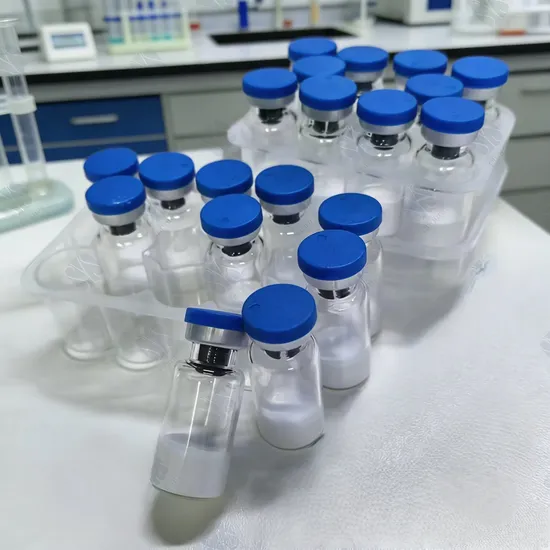
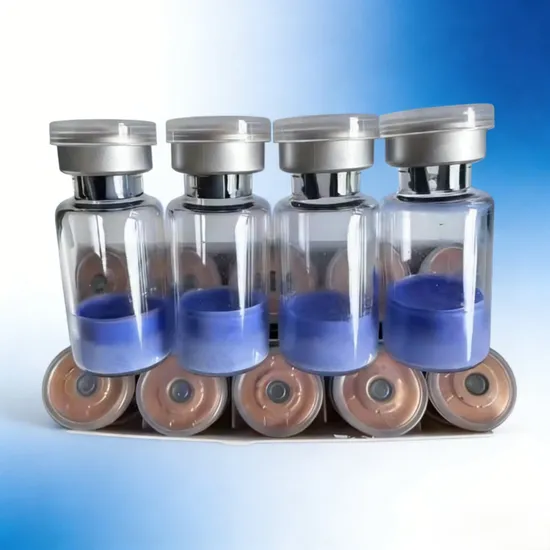
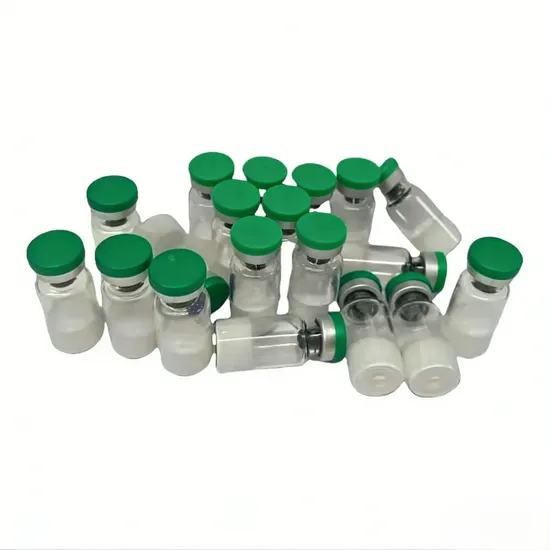
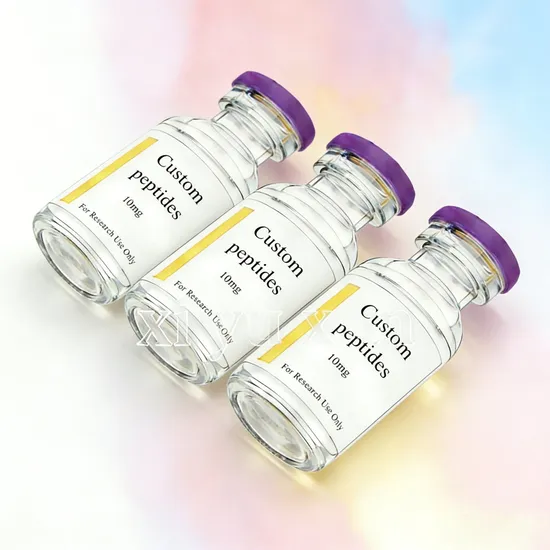
Batch-Specific Traceability — Every vial of GHK-Cu Copper Peptide ships with a Certificate of Analysis tied to its exact production lot, naming the HPLC column, mobile phase, and MS parameters so your laboratory can reproduce the result without guesswork.
Product Specification
| Parameter |
Value |
| Chemical Identity |
GHK-Cu (Copper Peptide), CAS 89030-95-5 |
| Product Type |
Peptide Raw Material |
| Category |
Custom Peptides |
| EC Number |
89030-95-5 (EINECS) |
| Structure |
Tripeptide coordinated with copper ions |
| Purity |
>99% by HPLC, confirmed by MS |
| Grade |
Cosmetic Grade |
| Technology |
Chemical Synthesis |
| Appearance |
Lyophilized powder (blue) |
| Packaging |
5 mg, 10 mg, 15 mg per vial |
| Storage |
-20°C, sealed, light-protected |
| Shelf Life |
24 months unopened at -20°C |
| Assay Methods |
HPLC, Mass Spectrometry, visual inspection |
| Standards |
GMP-standard facilities, USP, EP |
| HS Code |
29371290 |
| Delivery Time |
10 days |
Intended Use
| Use Category |
Notes |
| Laboratory research input |
Supplied as analytical-grade material for peptide characterization studies |
| Cosmetic formulation raw material |
Cosmetic-grade input for formulators evaluating copper peptide derivatives |
| Analytical reference |
Suitable for method development and QC laboratory alignment exercises |
| In vitro studies |
Applicable to stability and compatibility testing in controlled environments |
Supplied as a raw material for research and manufacturing use. Not for human or veterinary use. Not a finished product.
Why the Same GHK-Cu Batch Can Report Two Different Purity Numbers
Purity is not a single absolute figure — it is the product of a specific analytical method, column chemistry, and integration protocol.
I learned this the hard way with a GHK-Cu Copper Peptide >99% HPLC lot that tested clean on our side but came back lower when the buyer ran their own method. The discrepancy was not contamination; it was a different C18 column, a shifted gradient, and an integration window that captured a shoulder peak our method had excluded. After a month of back-and-forth, we aligned parameters and the numbers matched within tolerance. That experience changed how we document every batch of GHK-Cu Copper Peptide purity HPLC analytical verification — the method is now written into the CoA, not buried in a drawer. [NEED_CITE: ICH Q2 method validation principles for purity determination]

Triple-Method Verification at Every Release Point
Each production lot of this copper peptide undergoes three independent checks before release. HPLC determines the chromatographic purity against a defined method, Mass Spectrometry confirms the molecular identity and coordination state, and visual inspection catches any physical irregularity in the lyophilized cake. This layered approach means a GHK-Cu Copper Peptide purity HPLC analytical verification report carries corroborating evidence from orthogonal techniques, giving a buyer’s QC team multiple data points to cross-check upon receipt.
What the Certificate Actually Shows Your Laboratory
A useful CoA does more than state a number. For this material, the batch certificate names the exact HPLC column model, mobile phase composition, flow rate, and detection wavelength used to arrive at the purity figure. It records the observed mass from MS confirmation and describes the powder appearance. When your analysts set up their own GHK-Cu Copper Peptide purity HPLC analytical verification, they can start from our method parameters and adjust deliberately rather than troubleshooting blind. [NEED_CITE: Analytical method transfer guidelines between laboratories]
How Spec Parameters Affect Downstream Analytical Work
The choice to supply this peptide as a lyophilized powder rather than a solution directly affects how your laboratory handles it. Lyophilization removes bulk water, slowing hydrolytic degradation and supporting the stated 24-month shelf life at -20°C. Once reconstituted, the stability window narrows considerably, so aliquoting into single-use portions prevents cumulative freeze-thaw damage that would shift the impurity profile over time. The copper coordination also means that pH and buffer composition during reconstitution influence the complex’s integrity — a factor your method development team should account for when designing HPLC conditions. The 5 mg, 10 mg, and 15 mg vial sizes are calibrated for research-scale work, reducing the number of times a single container is opened and exposed to ambient moisture.
The Hidden Cost of an Incomplete Documentation Package
A purity figure without a named method is a number you cannot defend. When a shipment arrives and the buyer’s QC lab obtains a different result, the absence of documented analytical conditions turns a straightforward alignment exercise into a weeks-long dispute involving repeated shipments of data, retained sample exchanges, and sometimes outright rejection of the lot. The cost is not the material itself — it is the delayed timeline, the repeated courier fees, and the friction with downstream stakeholders who are waiting on release clearance. Incomplete import documentation compounds the problem by holding temperature-sensitive goods at customs, where cold-chain integrity degrades while paperwork is sorted out. [NEED_CITE: cold chain packaging standards for temperature-sensitive materials]
Why Analytical Laboratories Source This Material Here
Every CoA we issue references the specific batch it accompanies, eliminating the mismatch between certificate and vial that plagues multi-vendor procurement. The HPLC method, MS confirmation data, and visual description are recorded on that certificate so your QC team can reproduce conditions without requesting additional documentation. Retained samples from each production lot are held under controlled storage, enabling repeat testing if your laboratory observes an unexpected result. Temperature-controlled packing with transit records accompanies each dispatch, so you can verify that the -20°C chain was maintained from our facility to yours. Import paperwork is prepared according to destination requirements, reducing the risk of customs holds for international buyers.
Documentation & Traceability
- Batch-specific CoA naming the HPLC column, gradient, and detection parameters used for that lot
- Mass spectrometry confirmation report with observed mass matching the copper peptide complex
- Safety data sheet covering handling, storage, and transport classification for this material
- Certificate of origin prepared per destination country import requirements
- Retained sample from each production lot available for repeat-testing upon request
Storage, Handling & Shipping
- Store unopened vials at -20°C, sealed and light-protected to maintain the 24-month shelf life
- Aliquot reconstituted solutions into single-use portions to avoid repeated freeze-thaw cycles
- Temperature-controlled dispatch with transit records provided for every GHK-Cu shipment
- Cold-chain packaging maintains thermal stability throughout the documented transit period
- Import documentation and certificate of origin prepared to match destination customs requirements
Preparing Your Inquiry for a Smooth Fulfillment
When requesting this material, please specify your required vial size and total quantity, along with the analytical method your QC laboratory intends to use for incoming verification. If your lab operates under specific documentation requirements — such as a particular CoA format or additional origin paperwork — include those details so we can prepare the package before dispatch. For buyers evaluating this peptide as a reference standard, let us know whether retained samples or stability data will be needed to support your internal qualification process.
Frequently Asked Questions
Q: How is the batch-specific CoA matched to the vial I receive?
A: Each production lot receives a unique identifier that is printed on both the vial label and the accompanying Certificate of Analysis. The CoA documents the HPLC conditions, MS confirmation data, and visual inspection results generated specifically from that lot, ensuring traceability from our QC records to your receiving bench.
Q: Which analytical methods support the >99% purity claim?
A: Purity is determined by HPLC using a named column and gradient method documented on the CoA. Mass Spectrometry independently confirms the molecular identity of the copper peptide complex. Visual inspection verifies the expected blue lyophilized powder appearance. All three results are recorded on the batch certificate.
Q: What happens if our QC re-test shows a different purity value?
A: We provide the full analytical method parameters so your team can align conditions with ours. If a discrepancy persists, we can test a retained sample from the same lot under your specified conditions and share comparative chromatograms to identify where method differences are driving the variance.
Q: Are retained samples available for future reference?
A: Yes. Retained samples from each production batch are stored under controlled conditions matching the recommended -20°C specification. These samples support repeat testing, method alignment exercises, or dispute resolution if analytical results are ever questioned after delivery.
Q: What storage conditions apply to both lyophilized and reconstituted forms?
A: Unopened vials maintain stability for 24 months when stored sealed at -20°C and protected from light. Once reconstituted, the solution should be aliquoted and stored at -20°C or 4°C depending on the intended timeframe. Repeated freeze-thaw cycles should be avoided to prevent degradation of the copper peptide complex.