Analytical Method Transparency — Every shipment of research peptide raw material includes a batch-specific COA naming HPLC as the verification method, with chromatograms available so your QC team can align conditions before re-testing.
Product Specification
| Parameter |
Value |
| Product Type |
Peptide Raw Material |
| Category |
Research Peptides |
| EC Number |
89030-95-5 |
| Structure Notes |
Protein and Peptide |
| Appearance |
Lyophilized powder |
| Purity |
High purity verified by HPLC (method to be confirmed) |
| Assay Method |
HPLC |
| Specification |
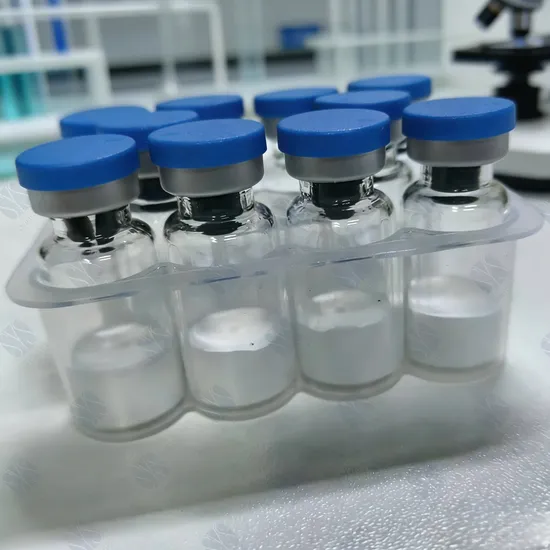
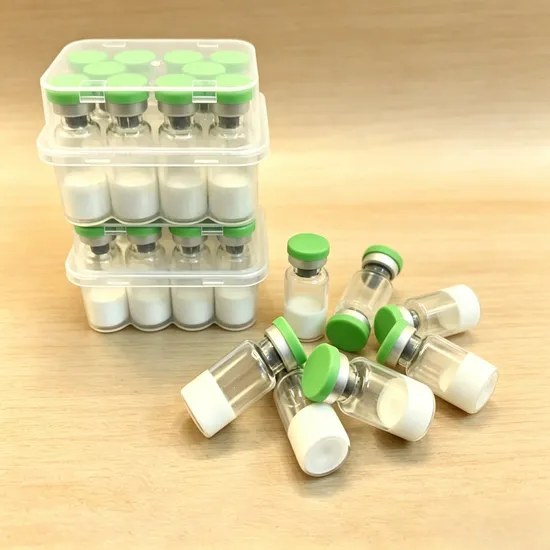
5 mg, 10 mg, 15 mg, 20 mg, 30 mg per vial |
| Container Type |
Bottle/Box |
| Storage Temperature |
−20 °C, sealed, light-protected (lyophilized); 4 °C (~1 month reconstituted); −20 °C (~6 months reconstituted) |
| Shelf Life |
24 months from date of manufacture (lyophilized, stored at −20 °C sealed, light-protected) |
| Reconstitution |
Sterile water or buffer to 1–10 mg/mL |
| Freeze-Thaw Limit |
Aliquot to avoid repeated freeze-thaw cycles |
| Certification |
COA included with each shipment |
| MOQ |
5 mg per vial |
| HS Code |
29371290 |
| Origin |
China |
| Trademark |
OEM |
| Standards Referenced |
USP, EP, GMP |
| Key Features |
Temperature-controlled dispatch, batch-specific documentation, retained sample protocol |
Intended Use
| Use Category |
Notes |
| Laboratory research input |
Supplied in 5 mg–30 mg vials suitable for bench-scale experiments |
| In vitro experimental reagent |
Lyophilized format supports controlled reconstitution for analytical workflows |
| Biochemical process investigation |
Research peptide raw material purity verified by HPLC per batch |
| Protein interaction study reagent |
Compatible with standard buffer systems at 1–10 mg/mL |
| Analytical reference material |
Batch-specific COA and retained samples enable cross-laboratory method alignment |
Supplied as a raw material for research and manufacturing use. Not for human or veterinary use. Not a finished product.
What a Certificate Cannot Tell You Without the Method
A COA listing only a purity number without the HPLC parameters behind it leaves your laboratory guessing.
Over the years I have handled dozens of disputes where a buyer’s QC team re-tested a research peptide raw material batch on their own HPLC system and obtained a purity result several points below the supplied certificate. The root cause was rarely a defective batch — it was a method mismatch. Column chemistry, mobile phase gradient, flow rate, and column temperature all shift peak integration boundaries, which directly changes the reported area percentage. Without knowing the original method, your lab has no baseline to reconcile against, and the back-and-forth can stretch for weeks while the material sits in quarantine. [NEED_CITE: HPLC method transfer variability in peptide analysis per ICH Q2 guidelines]

How HPLC Method Alignment Protects Purity Claims
Our approach is to ship every batch of research peptide raw material with a method summary that names the column type, gradient profile, flow rate, and detection wavelength used during release testing. This gives your analytical team a starting point for method transfer rather than forcing them to reverse-engineer conditions from a single chromatogram. When both laboratories operate within aligned parameters, purity data converges and release decisions are straightforward.
Retained Samples as the Bridge Between Two Laboratories
For every dispatched lot we archive retained samples under the same −20 °C, light-protected conditions documented on the COA. If your QC result diverges from ours, we can pull the retained sample and re-run the analysis using your laboratory’s exact method, then compare the two datasets side by side. This protocol eliminates speculation about whether a discrepancy stems from the material itself, from degradation during transit, or from analytical conditions — narrowing the variable to a single, resolvable question. [NEED_CITE: retained sample management practices in peptide raw material supply]
Reading the Specification Sheet Beyond the Purity Line
The lyophilized powder format of this research peptide raw material is stable for 24 months when stored sealed at −20 °C and protected from light, as documented in the batch specification sheet. Reconstitution with sterile water or buffer yields concentrations between 1 and 10 mg/mL; once in solution, the material should be held at 4 °C for up to one month or aliquoted and returned to −20 °C for longer holding. Each vial is filled at 5 mg, 10 mg, 15 mg, 20 mg, or 30 mg, allowing laboratories to select a size that minimizes open-vial time and reduces the risk of moisture uptake. Because lyophilized peptides are hygroscopic, any moisture absorbed during repeated openings can alter the effective peptide-to-excipient ratio, shifting downstream assay calculations. Freeze-thaw cycling of reconstituted solutions accelerates hydrolysis and aggregation, which is why we recommend single-use aliquots sized to your typical working volume. The HS Code 29371290 is declared on all export documents to facilitate classification at destination customs.
The Hidden Cost of Incomplete Documentation at Import
When a shipment of peptide raw material arrives at a European or international port without a matching certificate of origin, a safety data sheet formatted to the destination market’s requirements, or a COA whose batch number does not correspond to the physical labels, customs clearance stalls. Each day of delay exposes the cold chain to risk: insulated shippers are only rated for a finite number of hours, and once the thermal buffer is exhausted the internal temperature begins to drift. Even if the lyophilized format provides a stability margin, a broken temperature record means your receiving QC cannot verify that storage conditions were maintained throughout transit. The administrative burden of resubmitting documents, combined with the cost of rejecting and re-ordering a batch, routinely exceeds the original material value. [NEED_CITE: import documentation requirements for peptide raw materials under EU customs regulations]
Why Procurement Teams Route Research Peptide Orders Here
- Method-named COA per batch — Each certificate states the HPLC column, gradient, and detection parameters, so your lab can begin method alignment on day one instead of filing a deviation report.
- Retained sample archive — We hold retained samples under documented −20 °C conditions and can re-test against your protocol when a discrepancy arises.
- Vial sizes from 5 mg to 30 mg — Research quantities and small-scale pilot batches are sourced from the same controlled production stream, eliminating variability when you scale up.
- Cold-chain dispatch with transit records — Temperature-controlled packaging with data logging ensures you receive both the material and the proof that storage integrity was maintained.
- Destination-ready paperwork — Certificates of origin, safety data sheets, and import forms are prepared to the requirements declared at the time of order, reducing hold-ups at customs.
- Technical support on specifications — Our team can provide additional analytical data, such as chromatograms or mass confirmation spectra, upon request to support your internal review process.
Documentation & Traceability
- Batch-specific COA naming the HPLC method, column type, and gradient used for release
- Analytical method summary enabling direct transfer to your laboratory’s QC system
- Mass confirmation report verifying molecular identity of the peptide sequence
- Certificate of origin prepared per destination country import requirements
- Safety data sheet formatted to the regulatory framework of the receiving market
- Cold-chain packing record documenting shipper type, coolant mass, and transit temperature log
Storage, Handling & Shipping
- Store lyophilized vials at −20 °C, sealed and light-protected, for up to 24 months from manufacture date
- After reconstitution to 1–10 mg/mL, hold at 4 °C for approximately one month or aliquot and freeze at −20 °C
- Avoid repeated freeze-thaw cycles; prepare single-use aliquots to maintain peptide integrity
- Temperature-controlled dispatch with insulated packaging and transit data loggers for every shipment
- All export shipments include HS Code 29371290 and destination-specific import documentation
- Wear appropriate PPE when handling lyophilized powder to prevent inhalation or skin contact
Request a Quotation with Complete Analytical Transparency
To move forward, provide the vial size and quantity that match your experimental plan, along with the HPLC method your QC laboratory will use for incoming verification — this lets us flag any alignment issues before dispatch. Specify the destination country so we can prepare the correct certificate of origin and safety data sheet format in advance. If your workflow requires retained samples or additional chromatograms beyond the standard COA, note that in your inquiry and we will include them in the documentation package.
Frequently Asked Questions
Q: What analytical method is used to determine purity, and is it named on the COA?
A: Purity is determined by HPLC, and each batch-specific COA names the column type, gradient conditions, flow rate, and detection wavelength used during release testing. This transparency allows your QC laboratory to align its own method before re-testing, reducing the chance of unexplained discrepancies between our reported value and your incoming inspection result.
Q: How do you handle cases where the buyer’s QC re-test result differs from the supplied COA?
A: We pull the retained sample archived under the same −20 °C conditions and re-run the analysis using the buyer’s exact HPLC method. By comparing both datasets side by side, we identify whether the gap originates from method parameters, integration settings, or sample handling, and resolve the issue with documented evidence rather than speculation.
Q: Are retained samples kept per batch, and can they be re-tested on request?
A: Yes. Retained samples are stored sealed at −20 °C, light-protected, alongside the commercial batch. Upon request we can re-analyze these samples using your laboratory’s method and provide a comparative report. This protocol supports root-cause investigation if a specification dispute arises after delivery.
Q: What storage conditions and shelf life are documented for the lyophilized peptide?
A: The lyophilized powder is stable for 24 months when stored at −20 °C, sealed, and protected from light. Once reconstituted with sterile water or buffer, the solution may be held at 4 °C for approximately one month or aliquoted and stored at −20 °C for up to six months. These conditions are stated on the batch-specific COA and the handling sheet.
Q: What documentation is included with each shipment, and can additional analytical data be provided?
A: Every shipment includes a batch-specific COA, analytical method summary, safety data sheet, and certificate of origin. On request we also supply HPLC chromatograms, mass confirmation reports, and cold-chain packing records. Import documentation is tailored to the destination country’s requirements declared at the time of order.