Batch-Linked Traceability — Every vial of Melanotan II (CAS 121062-08-6) ships with a Certificate of Analysis that references the exact HPLC column, mobile phase gradient, and MS ionization mode used to verify that specific lot.
Product Specification
| Parameter |
Value |
| Chemical Identity |
Melanotan II (Mt2, Mt-2), CAS 121062-08-6 |
| Product Type |
Peptide Raw Material |
| Purity |
>99% by HPLC |
| Form |
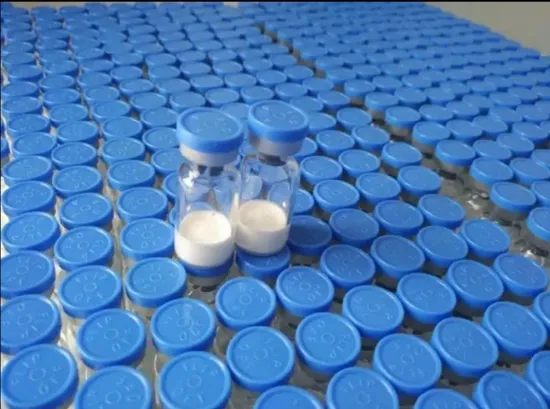
Lyophilized Powder |
| Appearance |
White |
| Available Specifications |
5 mg, 10 mg, 15 mg |
| Property |
Protein and Peptide |
| Classification |
High Purity Material |
| Storage Temperature |
-20°C, sealed, light-protected |
| Reconstitution Solubility |
Sterile water or buffer to 1–10 mg/mL |
| Shelf Life (lyophilized) |
Up to 24 months from manufacturing date |
| Shelf Life (reconstituted) |
~1 month at 4°C, ~6 months at -20°C |
| Transport Package |
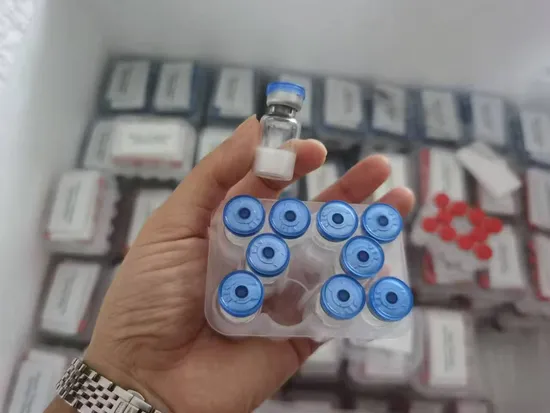
Bottle/Box |
| HS Code |
29371290 |
| Freeze-Thaw Limit |
Aliquot to avoid freeze-thaw cycles |
| Quality Standards |
GMP, ISO 9001 |
Intended Use
| Use Category |
Notes |
| Laboratory Research Input |
Supplied in research-scale vials for in vitro assay development |
| Analytical Reference Material |
Suitable as a reference standard for HPLC and MS method validation |
| Peptide Signaling Pathway Studies |
Compatible with receptor binding and cell-based assay workflows |
| Synthesis Intermediate |
Available in 5 mg, 10 mg, and 15 mg for feasibility and scale-up trials |
Supplied as a raw material for research and manufacturing use. Not for human or veterinary use. Not a finished product.
What a Certificate Cannot Tell You Without the Method
Purity is a number; the analytical method is the proof. A CoA stating ">99%" means very little if the buyer’s QC laboratory cannot replicate the chromatographic conditions that generated that figure.
In my years handling export documentation and technical support for peptide shipments, I have seen disputes drag on for weeks because a supplier’s CoA listed a purity value without naming the HPLC column, flow rate, or gradient profile. The receiving lab runs its own validated method, obtains a different result, and both sides are technically correct — they simply measured different things. Melanotan II CAS 121062-08-6 purity HPLC analytical verification resolves this gap by providing the complete method summary alongside the batch certificate, so both parties are reading from the same analytical playbook. [NEED_CITE: ICH Q2 method validation guidelines for peptide purity determination]

Aligning Your QC Protocol With Our HPLC Conditions
When your laboratory receives Melanotan II (Mt2) for re-verification, the first step is confirming that your HPLC setup matches the conditions under which the >99% purity was established. Our analytical method summary documents the exact column chemistry, mobile phase composition, gradient timeline, flow rate, and detection wavelength used for each batch. This level of detail allows your QC team to reproduce the chromatogram without guesswork. Melanotan II CAS 121062-08-6 purity HPLC analytical verification is not a claim — it is a reproducible data set tied to the vial in your hands.
Mass Spectrometry Confirmation of Sequence Identity
Purity alone does not confirm that the peptide in the vial is the peptide on the label. Each batch of Melanotan II is subjected to mass spectrometry to verify molecular weight and confirm the amino acid sequence, including any modifications specified in the product designation. The MS data accompanies the HPLC purity report in the documentation package, giving your team orthogonal confirmation of identity. This dual-method approach eliminates ambiguity between structurally related impurities and the target compound. [NEED_CITE: mass spectrometry confirmation standards for synthetic peptides]
Impurity Profiling Beyond the Main Peak
A chromatogram showing a single dominant peak does not tell the full story. Our impurity profiling identifies and quantifies individual related substances — deletion sequences, truncation products, and residual trifluoroacetate counterions — that could interfere with downstream assay sensitivity or formulation stability. Understanding the impurity spectrum of Melanotan II CAS 121062-08-6 is critical for researchers developing analytical methods or establishing specification limits for their own quality systems. Each impurity is reported with its retention time and relative area percentage, providing a complete picture of batch composition.
Why Method Transparency Matters for Lyophilized Peptides
Lyophilized powder form provides inherent stability, but the analytical conditions used before freeze-drying must be documented precisely. Water content, residual solvents, and counterion ratios all influence the actual peptide content per milligram of powder. When Melanotan II CAS 121062-08-6 purity HPLC analytical verification is performed, these parameters are recorded so that your laboratory can account for them during reconstitution and weighing. A batch that tests at >99% peptide purity by HPLC may still contain bound water or acetate salts that affect net peptide mass — our documentation makes these factors explicit. [NEED_CITE: Karl Fischer titration standards for lyophilized peptide water content]
The Hidden Cost of Incomplete Analytical Documentation
When a Certificate of Analysis omits the HPLC method details, the downstream consequences extend far beyond a single disputed shipment. Procurement teams face project delays while QC departments negotiate re-testing protocols with the supplier. In some cases, entire batches are returned or discarded because the receiving laboratory cannot reconcile its data with the CoA. For Melanotan II and similar research-grade peptides, the cost of a documentation gap includes wasted material, lost instrument time, and delayed experimental timelines. Every shipment we dispatch includes a complete analytical method summary to prevent these scenarios from arising in the first place. [NEED_CITE: supply chain documentation requirements for research peptide imports]
Why Procurement Teams Source This Material Here
Batch-specific CoA with named analytical methods. Every vial of Melanotan II ships with a certificate that lists the HPLC column model, gradient conditions, and MS parameters used — not just a pass/fail number.
Analytical method summary for QC replication. Your laboratory receives the full chromatographic protocol so re-testing produces comparable results without back-and-forth correspondence.
Retained samples for dispute resolution. We archive reference samples from each production lot, enabling independent re-analysis if your QC data diverges from the original CoA.
Research and bulk quantities from one source. Whether you need a single 5 mg vial for method development or multi-gram quantities for scale-up, the specification and documentation remain consistent.
Import documentation prepared per destination. HS code 29371290, Certificate of Origin, and regulatory paperwork are compiled according to your country’s customs requirements before dispatch.
Technical support on specification alignment. Our team reviews your QC method against our release method before shipment to identify potential discrepancies proactively.
Documentation & Traceability
- Batch-specific CoA stating HPLC column, mobile phase, and gradient for this Melanotan II lot
- Mass spectrometry report confirming molecular identity and sequence integrity
- Analytical method summary enabling your QC lab to replicate purity testing
- Safety data sheet covering handling, storage, and transport conditions for lyophilized powder
- Certificate of Origin and HS code 29371290 documentation for customs clearance
- Retained sample archive supporting future re-testing or specification disputes
Storage, Handling & Shipping
- Store Melanotan II at -20°C in original sealed, light-protected container to maintain 24-month lyophilized shelf life
- Aliquot reconstituted solution into single-use portions to prevent freeze-thaw degradation cycles
- Reconstituted material remains stable approximately one month at 4°C or six months at -20°C
- Transport in insulated packaging with temperature monitoring to preserve -20°C storage requirement
- Shipped under HS code 29371290 with complete import documentation for destination customs
How to Structure Your Inquiry
To ensure specification alignment, please provide your required purity threshold, the analytical method your QC laboratory uses for verification, and the vial size needed (5 mg, 10 mg, or 15 mg). If your facility requires specific import documentation formats or retained sample protocols, include those requirements in your initial request. For custom analytical specifications or bulk scale-up beyond catalog sizes, share your target quantity and any method modifications your lab has validated.
Frequently Asked Questions
Q: How is the CoA linked to the specific batch of Melanotan II received?
A: Each Certificate of Analysis carries the exact lot number printed on the vial label. The CoA references the HPLC run date, column serial number, and MS acquisition parameters for that specific production batch. If your received lot number does not match the CoA, contact our documentation team before initiating QC testing.
Q: What analytical methods are used to verify >99% purity?
A: Purity is determined by reversed-phase HPLC with UV detection, and identity is confirmed by mass spectrometry. The full method summary — including column chemistry, gradient profile, flow rate, and ionization mode — is provided with each shipment so your laboratory can replicate the conditions exactly.
Q: What support is available if our QC re-test results differ from the CoA?
A: We provide the complete chromatographic conditions so your team can align methods first. If a discrepancy persists after method alignment, we retrieve the retained sample from the same lot and perform parallel re-testing. Results are compared chromatogram-by-chromatogram to identify the source of divergence.
Q: Are retained samples kept for future re-testing or dispute resolution?
A: Yes. Reference samples from every production lot are archived under controlled storage conditions matching the labeled specifications. These retained samples are available for independent re-analysis at any point during the product’s stated shelf life.
Q: What are the validated storage conditions and shelf life?
A: Lyophilized Melanotan II is stable for up to 24 months from the manufacturing date when stored at -20°C in a sealed, light-protected container. After reconstitution, the solution is stable for approximately one month at 4°C or six months when refrozen at -20°C in aliquoted portions.