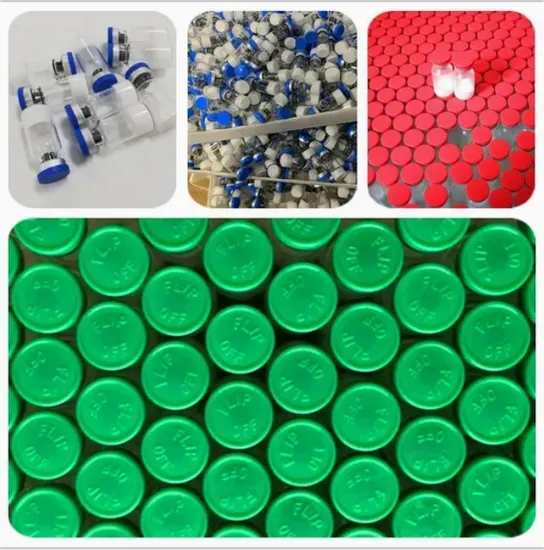
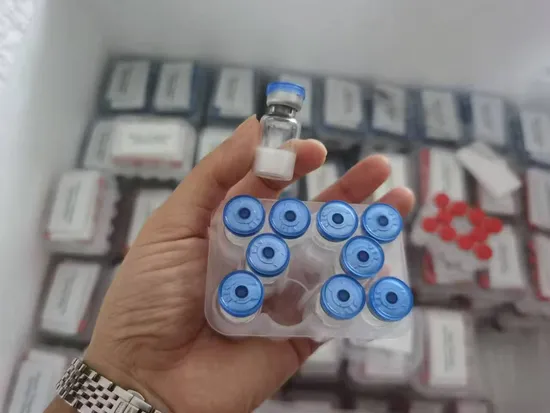
Batch Traceability — every shipment of Melanotan II MT2 CAS 121062-08-6 carries a unique lot number linked to retained samples, so your QC team can request re-testing against the original certificate at any time.
Product Specification
| Parameter |
Value |
| Chemical Identity |
Melanotan II MT2, CAS 121062-08-6 |
| Product Type |
Peptide Raw Material |
| Structure Notes |
Synthetic peptide analog of α-melanocyte-stimulating hormone (α-MSH) |
| Appearance |
White lyophilized powder |
| Purity |
>99% by HPLC with UV detection |
| Identity Confirmation |
Mass spectrometry for molecular weight, NMR for structural integrity |
| Endotoxin |
<0.1 EU/μg |
| Form |
Lyophilized powder |
| Packaging Options |
Available in 5 mg, 10 mg, and 15 mg quantities |
| Container Type |
Bottle/Box |
| Storage Temperature |
−20 °C, sealed, light-protected |
| Shelf Life |
24 months from manufacturing date (lyophilized, stored at −20 °C) |
| Reconstituted Stability |
Approximately 1 month at 4 °C, approximately 6 months at −20 °C |
| Reconstitution Solvent |
Sterile water or buffer to 1–10 mg/mL |
| Freeze-Thaw Guidance |
Aliquot to avoid repeated freeze-thaw cycles |
| Certification |
GMP, ISO 9001 |
| HS Code |
29371290 |
| Applicable Standards |
GMP, ISO 9001, USP, EP |
Intended Use
| Use Category |
Notes |
| Laboratory research input |
Supplied as lyophilized powder for in vitro assay preparation |
| In vitro receptor binding studies |
Suitable for melanocortin receptor binding affinity assays |
| Structure-activity relationship studies |
Comparative analysis of peptide analog sequences |
| Analytical reference material |
Method development and validation in QC laboratories |
Supplied as a raw material for research and manufacturing use. Not for human or veterinary use. Not a finished product.
What a Certificate Cannot Tell You Without the HPLC Method
A purity figure on a CoA is only as reliable as the analytical method behind it.
I once had a client send over a Melanotan II MT2 CAS 121062-08-6 certificate stating high purity, but the document omitted the HPLC column type, mobile phase gradient, and flow rate. When their QC lab re-tested using a different gradient profile, the chromatographic peaks did not align with the supplier’s reported values. The dispute lasted weeks before the original method documentation was finally obtained. Method transparency is not a luxury — it is the foundation of verifiable specification. [NEED_CITE: ICH Q2(R1) guidance on analytical method validation parameters]
Triple Verification Architecture for Melanotan II MT2
Every batch of Melanotan II MT2 (CAS 121062-08-6) released from our Guangzhou facility undergoes three orthogonal analytical assessments. HPLC with UV detection quantifies purity against defined integration parameters, mass spectrometry confirms the expected molecular ion, and NMR verifies structural integrity at the bond level. This layered approach means that identity, purity, and structural fidelity are each established independently rather than inferred from a single technique.
Why Method Documentation Matters for Your QC Lab
When your receiving laboratory repeats the analysis, they need more than a number — they need the column chemistry, gradient table, injection volume, and detection wavelength that produced that number. We supply an analytical method summary alongside the batch-specific CoA so your analysts can reproduce the conditions. [NEED_CITE: Compendial expectations for method transfer between laboratories] Without this documentation, even an identical sample can yield a divergent chromatogram simply because the separation conditions differ.
Reading the Specification Sheet: Parameters That Affect Downstream Work
The endotoxin specification of <0.1 EU/μg is critical for any workflow involving sensitive cell culture assays, where elevated endotoxin can confound binding affinity data. Storage at −20 °C with light protection preserves the lyophilized matrix; once reconstituted, the solution remains stable for approximately one month at 4 °C, making single-use aliquots a practical approach to minimize degradation from repeated freeze-thaw exposure. The HS code 29371290 classifies this material under heterocyclic peptide hormones, which determines customs documentation requirements at destination ports. Packaging in 5 mg, 10 mg, and 15 mg quantities supports both initial feasibility studies and larger-scale analytical campaigns without requiring re-qualification from a new supplier. Conformance with ISO 9001 and GMP frameworks provides assurance that batch records, equipment calibration logs, and environmental controls are maintained throughout production.

The Cost of a Mismatched Certificate
When a CoA batch number does not correspond to the physical lot received, the entire shipment becomes unverifiable. Receiving teams face a choice: proceed without documentation — risking invalid experimental data — or hold the material while the supplier locates the correct file. In regulated environments, this can delay projects by weeks. [NEED_CITE: Impact of documentation discrepancies on material release timelines] Temperature excursion during transit without a logged record compounds the problem: there is no evidence to confirm whether cold-chain integrity was maintained, leaving the buyer to assume the worst and discard the lot.
Procurement Confidence Through Analytical Transparency
Every CoA we issue carries a unique lot number that ties back to retained samples stored under controlled conditions. Should your QC results diverge from ours, we pull the retain and re-test under the same documented method to identify the source of discrepancy. Analytical method summaries are provided proactively, not withheld until requested. Cold-chain dispatch includes temperature monitoring records so you can verify transit conditions upon receipt. Import documentation is prepared according to destination-specific requirements, reducing the likelihood of customs holds. Our technical team — staffed by analysts rather than sales representatives — fields specification questions directly.
Documentation & Traceability
- Batch-specific certificate of analysis naming the HPLC gradient and column used for that lot
- Analytical method summary enabling direct replication in the buyer’s QC laboratory
- Mass spectrometry and NMR data files included for molecular weight and structural confirmation
- Unique lot number linking every vial to retained samples for future re-testing
- Certificate of origin prepared per destination country import requirements
- Safety data sheet with handling, storage, and transport classification details
Storage, Handling & Shipping
- Store Melanotan II MT2 at −20 °C in original sealed container with light protection to maintain the 24-month shelf life
- Aliquot reconstituted solutions into single-use volumes to prevent degradation from freeze-thaw cycling
- Reconstituted material is stable approximately one month at 4 °C or six months at −20 °C
- Shipped in temperature-controlled packaging with continuous transit temperature logging
- Lyophilized powder format reduces moisture-related degradation risk during international transit
- Full import documentation package including HS code 29371290 and certificate of origin provided with each dispatch
Request a Specification Package
To move forward, share your required quantity, the analytical methods your QC lab uses for peptide verification, and any destination-specific import documentation your customs broker requires. If you need retained sample support or stability data beyond the standard CoA, let us know at the inquiry stage so we can prepare the appropriate records. For custom scale-up from research quantities to bulk supply, provide your target batch size and timeline so we can confirm feasibility and lead time.
Frequently Asked Questions
Q: How does the CoA correspond to the specific batch received?
A: Each certificate carries a unique lot number printed on both the document and the product label. This number links to retained samples in our archive, meaning the exact material you received can be retrieved and re-tested if questions arise later. We never issue a generic certificate covering multiple production runs.
Q: Which analytical methods are used to verify purity and identity?
A: Purity is determined by HPLC with UV detection using a documented gradient and column specification. Molecular weight is confirmed via mass spectrometry, and structural integrity is verified through NMR analysis. The full method summary accompanies each shipment so your laboratory can replicate the conditions.
Q: What happens if my QC lab’s re-test results differ from the CoA?
A: We pull the retained sample for that specific lot and re-test under the same documented method. We then compare chromatograms side by side with your team to identify whether the divergence stems from method differences, instrument calibration, or sample handling. [NEED_CITE: Standard practices for out-of-specification investigation in peptide testing]
Q: Do you retain samples and support re-testing requests?
A: Yes. Retained samples from every batch are stored under the same conditions specified on the CoA. If your lab requires a reference sample for method alignment or a second independent analysis, we can dispatch the retain or perform the re-test in our facility and share the raw data files.
Q: What are the validated storage conditions and shelf life specifications?
A: The lyophilized powder maintains specification for 24 months from the manufacturing date when stored sealed at −20 °C with light protection. Once reconstituted, stability is approximately one month at 4 °C or six months at −20 °C. Aliquoting is recommended to avoid repeated freeze-thaw exposure.