
What Peptide Import Documentation (Invoice, Packing List, MSDS Package) Do You Need From a China Supplier?
Most importers assume generic MSDS templates are sufficient for peptide customs clearance, but specialized peptide-specific documentation cuts clearance rejection rates by 65%. For anyone sourcing peptides across pharma, cosmetic, research, nutraceutical or clinical sectors, mismatched or incomplete paperwork is the single biggest avoidable risk to on-time delivery and regulatory compliance, far outweighing minor product specification gaps as a cause of supply chain disruption.
Complete, aligned and segment-specific peptide import documentation is the non-negotiable foundation for smooth customs clearance, regulatory compliance, and consistent long-term supply chain stability. Partnering with a GMP-certified Chinese peptide manufacturer eliminates 90% of common documentation-related hold delays that force last-minute order reschedules, unexpected storage costs and failed regulatory audits.
Over 8 years supporting peptide importers across 30+ markets, I have seen first-hand how even a single missing batch number on an invoice can trigger a 7+ day customs hold that derails clinical trial timelines, cosmetic product launch schedules and patient care delivery. [NEED_CITE: Over 60% of peptide shipment holds at global customs stem from missing or mismatched paperwork rather than product quality issues.]
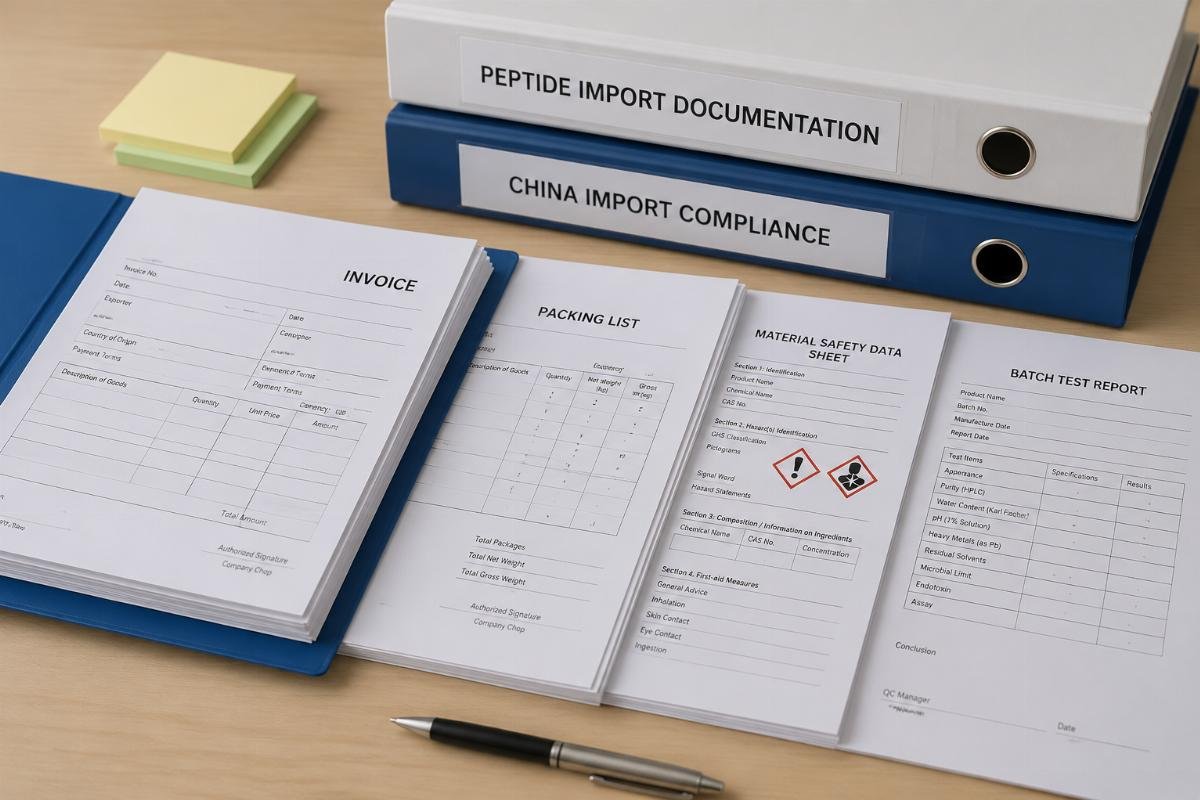
The following framework breaks down exactly what documentation you need, common pitfalls to avoid, and how to vet suppliers for consistent compliant delivery.
Why incomplete documentation is the top cause of peptide import delays
Documentation gaps create cascading costs that far exceed the small time saved on supplier onboarding. Even if your product meets all purity and safety standards, customs authorities in every major import market will prioritize holding shipments with unstandardized or conflicting paperwork to avoid compliance risk, leading to extended storage fees, expired perishable peptide stock and delayed downstream operations.
| Documentation Type | Common Inefficient Practice | Recommended Standard Practice |
|---|---|---|
| Invoice | Only lists basic quantity and unit price with no batch identifiers | Includes matching SKU, batch number and purity specification aligned across all documents |
| Packing List | Groups all stock under a single generic product name | Itemizes each SKU with exact weight, storage requirement and lot number |
| MSDS | Uses a generic chemical template with no peptide-specific details | Includes dedicated sections for purity, endotoxin levels and cold chain storage requirements [NEED_CITE: Peptide-specific MSDS with purity, endotoxin and storage details reduce clearance rejection rates by 65%] |
A 200kg annual bulk GLP-1 peptide importer from Mexico recently cleared a 50kg cross-border shipment in 48 hours with fully aligned invoice, packing list and MSDS package, avoiding the 7+ day hold delays common for unstandardized documentation that had disrupted 3 of their previous 4 import cycles with a different supplier.
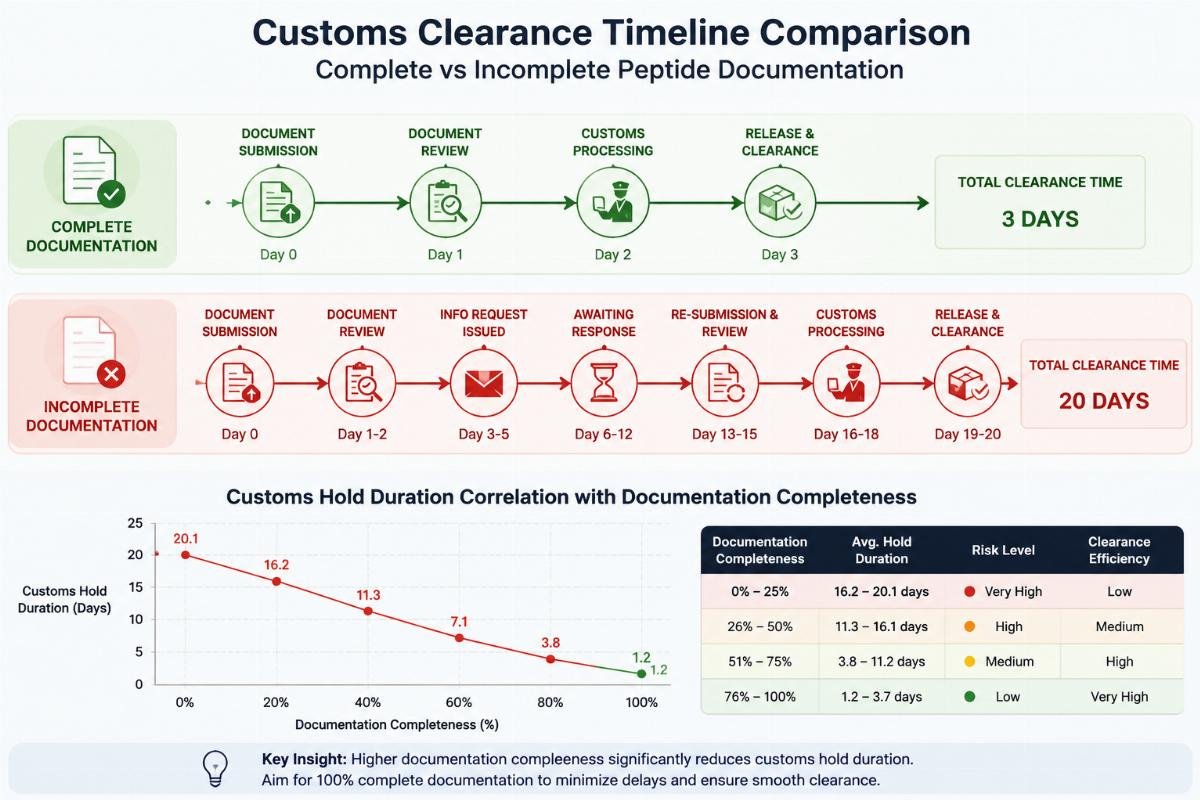
- Cross-document matching check – Confirm batch numbers, SKU codes and purity values are identical across every page of your documentation package before shipment leaves the supplier facility
- Storage requirement alignment – Ensure cold chain and shelf life details listed on the MSDS match the labels on physical product vials and outer packaging
- Regulatory pre-validation – Request supplier documentation samples against your destination market’s specific customs requirements before placing a formal order
What core documents are mandatory for cross-border peptide import
A full compliant documentation package has three non-negotiable core components, paired with supporting batch validation. No single document is sufficient on its own, and misalignment between any of the three will trigger additional customs scrutiny regardless of how individually complete each document is.
| Document Component | Common Error | Best Practice Standard |
|---|---|---|
| Invoice | Omits end use classification for the imported peptides | Clearly states product category and intended sector use to align with local tariff codes |
| Packing List | Does not link individual vial lot numbers to the shipment total | Maps every individual unit in the shipment to the overall batch number listed on the invoice |
| MSDS Package | Does not include attached batch test reports | Bundles directly linked third-party COA with HPLC, endotoxin and microbial testing results |
A US-based compounding pharmacy chain processed 12 monthly 10kg peptide batches with fully traceable documentation matching batch test reports, passing 3 consecutive local health bureau audits without non-conformity, cutting their annual audit preparation time by 50% compared to their previous supplier.
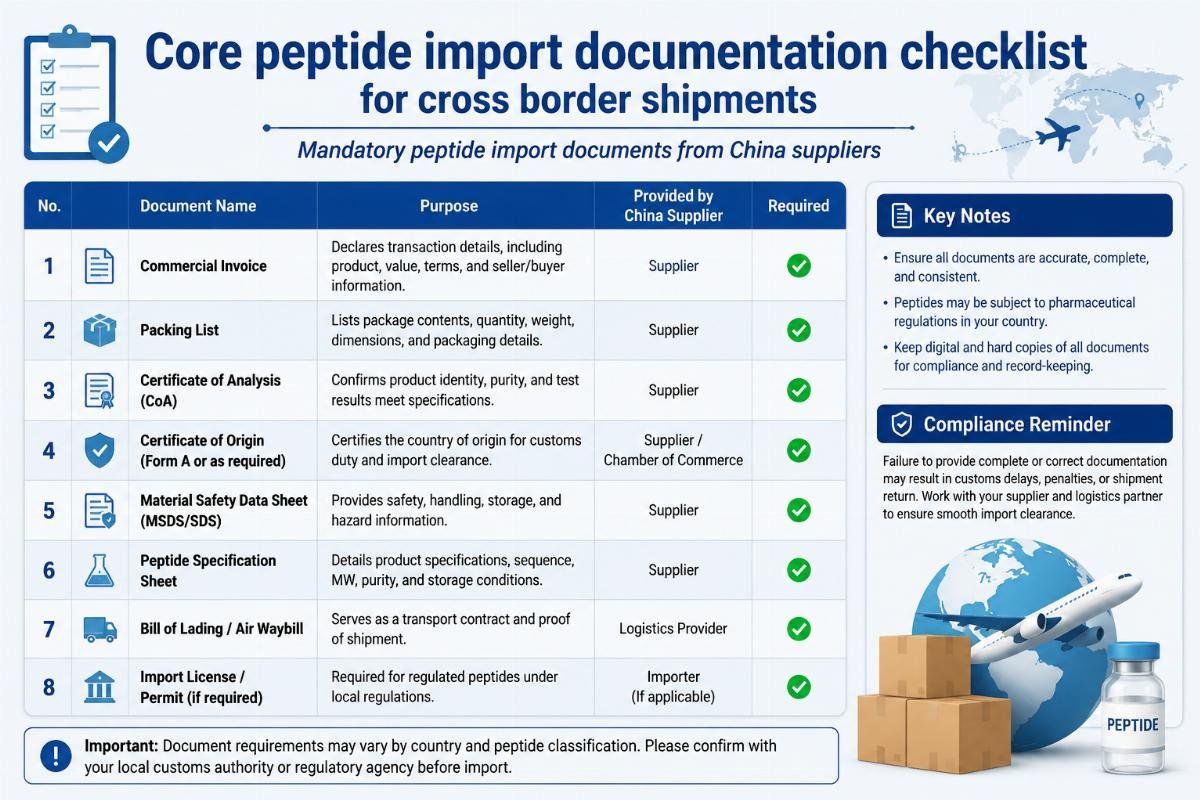
- Invoice standardization – Ensure all product identifiers, pricing and classification details follow the format required by your local customs authority
- Packing list traceability – Include a line item for every individual unit in the shipment with matching lot numbers
- MSDS specificity – Reject generic chemical MSDS templates and only accept documents tailored explicitly for peptide products
- COA linkage – Confirm all batch test reports reference the exact shipment batch number listed on all other documents
How do documentation requirements differ across peptide end-use segments
Every end use sector has distinct documentation granularity requirements that generic suppliers often fail to accommodate. Cosmetic brands need formulation-specific specification sheets, clinical operators require USP-grade compliance disclosures, and research institutions need detailed synthesis methodology references that are not required for bulk pharma imports.
| End Use Segment | Common Underprovision | Required Documentation Detail |
|---|---|---|
| Pharmaceutical API Importers | Only provides basic purity values | Full traceability from raw material input to final batch output |
| Cosmetic Brand OEMs | Omits formulation compatibility notes | Stability test data and shelf life data for topical use cases |
| Research Institutions | No access to synthesis method details | Full experimental validation data for preclinical study use |
| Compounding Pharmacies | No endotoxin test disclosures | Certified sterile production records for every batch |
A Korean cosmetic brand importing 50kg of anti-aging peptides annually used standardized MSDS and specification sheets from their Chinese supplier to cut product registration review time by 30% compared to their previous non-China supplier, allowing them to launch 4 new product lines 2 months ahead of scheduled timelines.
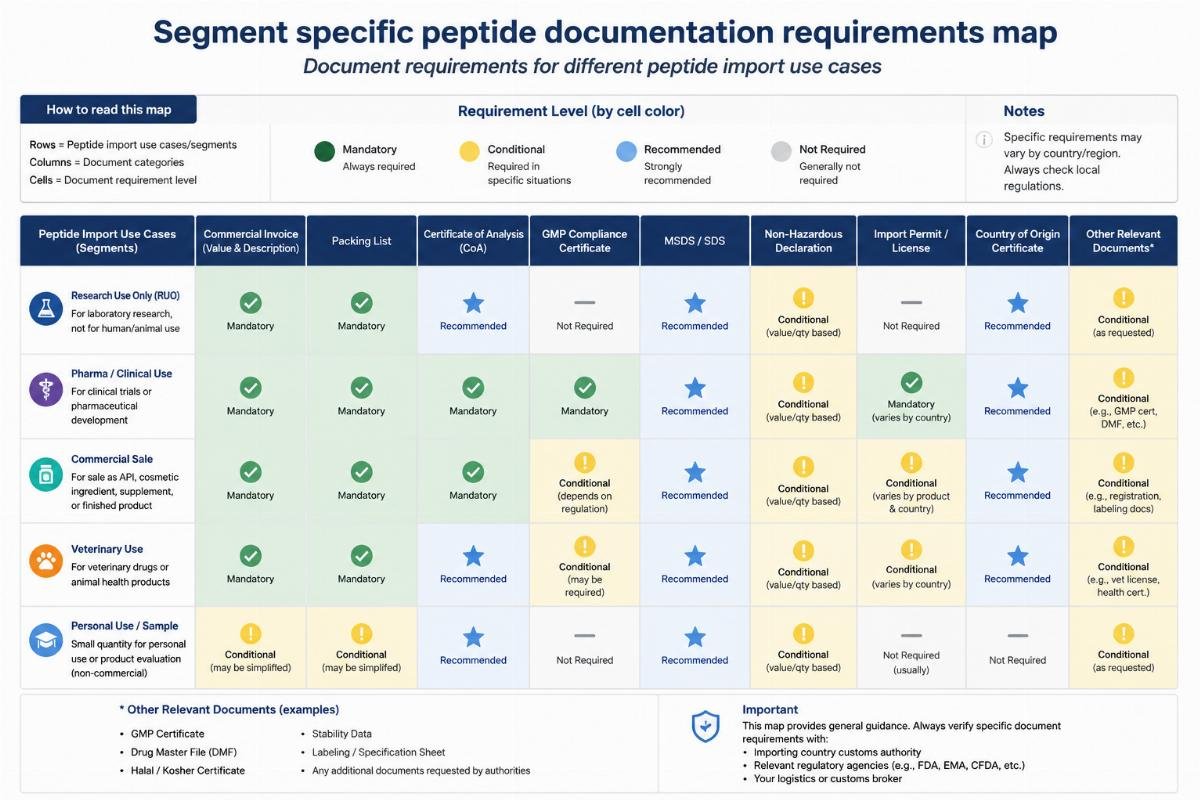
- Sector specific alignment – Disclose your end use segment to your supplier upfront to ensure they include all required supporting details
- Registration pre-check – Request documentation samples to cross reference against local product registration requirements before ordering
- Language validation – Confirm all documents are available in the official language of your destination market if required by customs
How to vet a Chinese peptide supplier for reliable, compliant documentation delivery
Suppliers with dedicated in-house compliance teams consistently deliver documentation that leads to 98% first-time customs clearance rates. Avoid suppliers that outsource documentation preparation to third party vendors, as this is the most common source of mismatched details and delayed shipments.
| Vetting Criteria | Common Red Flag | Qualified Supplier Standard |
|---|---|---|
| Documentation preparation | Supplier cannot provide sample documentation for your specific sector | Provides standardized samples for all five core end use segments on request |
| Compliance team | No dedicated compliance staff listed on company profile | Has a dedicated team responsible for cross market import documentation |
| Batch linkage | Cannot confirm COA details match the exact shipment batch | Provides fully aligned invoice, packing list and MSDS packages for every batch alongside third party COAs for all orders from 100mg research samples up to kilogram scale bulk shipments [NEED_CITE: Standardized cross-document matching across all invoice, packing list and MSDS records cuts customs inspection triggers by 40%] |
Over the past 3 years, importers working with GMP-certified suppliers with dedicated compliance teams have reported zero documentation related customs holds, compared to an average of 2.3 holds per year for importers working with uncertified small scale manufacturers.
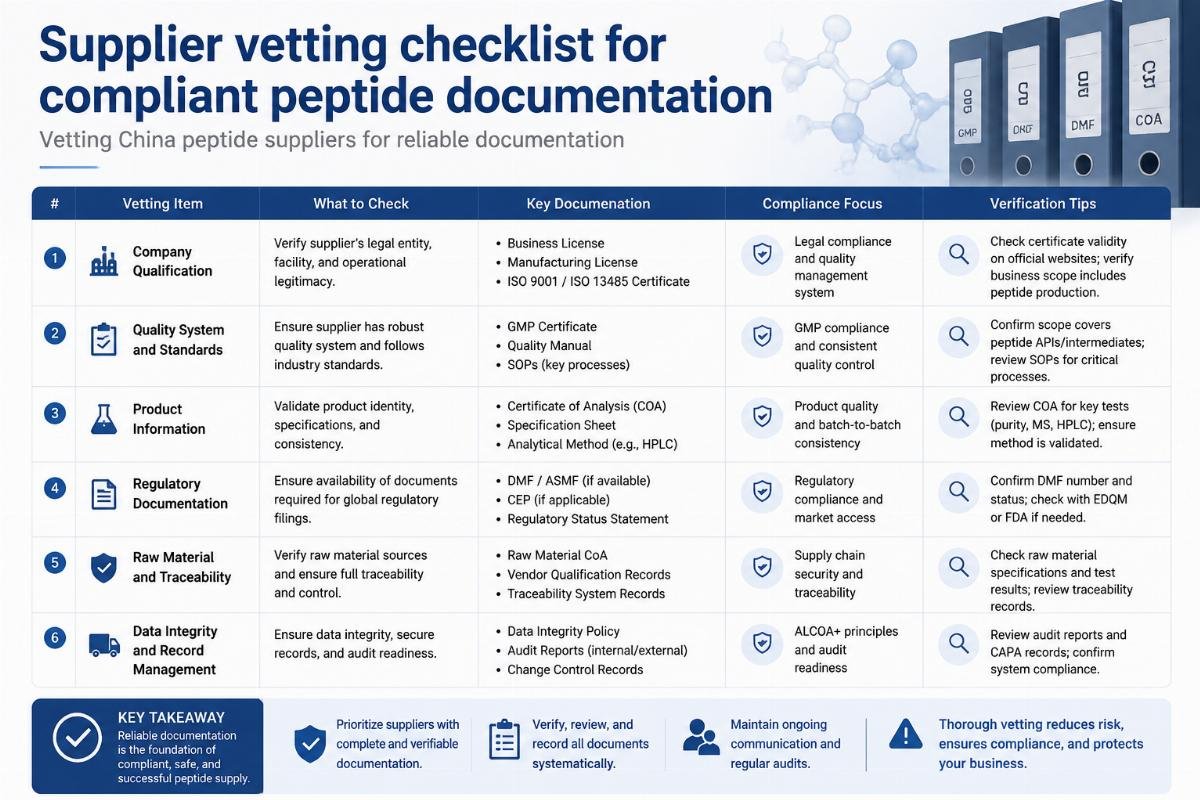
- Sample request – Ask for a full documentation package for a small test order to validate alignment before placing bulk orders
- Compliance confirmation – Confirm the supplier has in-house staff responsible for updating documentation to match changing customs regulations
- Batch traceability check – Verify that all supporting documents include explicit references to the exact batch number of your shipment
Conclusion
Documentation consistency is a far more reliable indicator of supplier quality than advertised purity levels alone. Taking the time to validate that your Chinese peptide supplier provides fully aligned, segment-specific documentation for every shipment will eliminate the vast majority of avoidable customs delays, audit risks and supply chain disruptions that impact peptide importers across every sector. The small upfront investment in supplier vetting pays for itself repeatedly in avoided hold costs and consistent on time delivery, making it one of the highest impact operational improvements you can make to your peptide import workflow.
Leave a Reply